Content Menu
● Core Overview of Electric Golf Cart Batteries
● Typical Battery Configurations by Voltage
>> 36-Volt Electric Golf Cart Batteries
>> 48-Volt Electric Golf Cart Batteries
>> 72-Volt High-Performance Systems
● Lead-Acid vs Lithium: How Chemistry Changes Battery Count
>> Traditional Lead-Acid Battery Packs
>> Modern Lithium Golf Cart Batteries
● How Battery Count Affects Performance and Range
● Practical Steps to Check How Many Batteries Your Golf Cart Has
>> Step-by-Step Battery Inspection
● Choosing the Right Battery Setup for Your Application
>> Light-Duty Golf Course and Residential Use
>> Resort, Tourism, and Commercial Fleet Use
>> Off-Road, Hunting, and Utility Carts
● Quick Reference: Typical Battery Counts by System Voltage
● OEM Perspective: Custom Battery Solutions for Global Buyers
● Actionable Buying Tips for Electric Golf Cart Batteries
● Clear Call to Action: Design Your Ideal Electric Golf Cart Battery Solution
● FAQs About Electric Golf Cart Batteries
>> 1. How many batteries does a typical electric golf cart use?
>> 2. Do 48V carts always use more batteries than 36V carts?
>> 3. Can I replace lead-acid batteries with a single lithium pack?
>> 4. How does battery count affect maintenance?
>> 5. When should I consider upgrading from 36V to 48V or 72V?
● Citations:
Understanding how many batteries an electric golf cart uses starts with voltage, battery type, and the cart's intended application. Most modern golf carts run on 36V, 48V, or 72V systems powered by multiple deep-cycle batteries wired in series, while newer lithium packs increasingly replace traditional lead-acid banks. Choosing the right configuration helps owners balance performance, runtime, and total cost of ownership over the life of the cart.
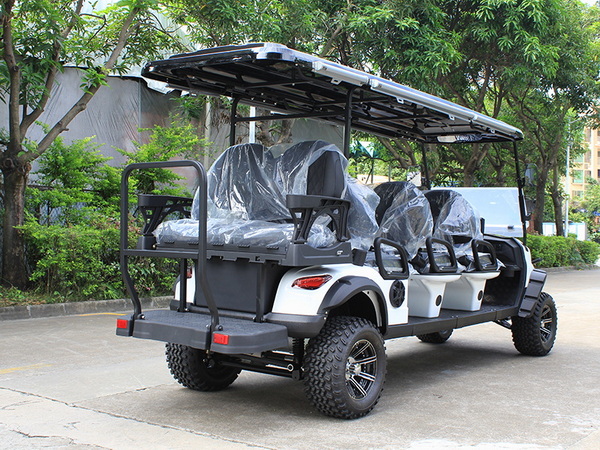
Core Overview of Electric Golf Cart Batteries
For both buyers and fleet operators, the topic of electric golf cart batteries typically focuses on three aspects: system voltage, battery configuration, and chemistry. Users want to know how many batteries are needed, how long they last, and which configuration works best for golf courses, resorts, residential communities, or commercial fleets.
- Most mainstream electric golf carts are 36V or 48V, with 72V used for higher-performance or commercial carts.
- Battery count usually ranges from four to eight units in standard OEM setups, with some lithium systems using a single high-capacity pack instead of many small batteries.
- Voltage and amp-hour capacity together determine torque, speed, and real-world driving range per charge.
Typical Battery Configurations by Voltage
Golf cart manufacturers and OEM suppliers follow standard pack layouts optimized around 6V, 8V, and 12V deep-cycle units for lead-acid systems. Lithium packs simplify this by using fewer, higher-energy modules designed as “drop-in” replacements for traditional banks.
36-Volt Electric Golf Cart Batteries
36V golf carts are usually entry-level or older models focused on moderate speed and range. They remain common in golf course fleets and cost-sensitive applications where battery replacement price is a key consideration.
- A typical 36V system uses six 6V deep-cycle batteries in series (6 × 6V = 36V).
- These packs are well-proven and relatively affordable, but they are heavy and require regular watering and equalization when using flooded lead-acid technology.
- 36V carts are best suited to flatter terrain, lighter loads, and standard 18-hole duty cycles rather than steep hills or heavy commercial use.
48-Volt Electric Golf Cart Batteries
48V electric golf carts have become the mainstream standard because they offer a strong balance between power, efficiency, and range. Many modern resort, community, and utility carts run 48V systems for better torque and longer runtime per charge.
Common lead-acid configurations include:
- Six 8V batteries in series → 48V total (6 × 8V)
- Eight 6V batteries in series → 48V total (8 × 6V)
- Four 12V batteries in series → 48V total (4 × 12V)
Each layout has trade-offs in weight, physical space, and amp-hour capacity. For example, eight 6V batteries typically deliver higher total capacity and range than four 12V units in some 48V systems, but they increase pack complexity and replacement count.
72-Volt High-Performance Systems
72V electric golf carts target high-torque and high-speed requirements such as hunting vehicles, lifted carts, and commercial utility applications. Higher voltage allows the controller and motor to deliver more power at similar current levels, boosting acceleration and hill-climbing ability.
Typical setups include:
- Six 12V batteries in series (6 × 12V = 72V) for lead-acid packs
- One or more 72V lithium modules, or multiple lithium units arranged to reach 72V equivalent in modular systems
These systems cost more upfront and may require upgraded controllers and chargers but deliver premium performance and longer potential range with the right pack sizing.
Lead-Acid vs Lithium: How Chemistry Changes Battery Count
Battery chemistry has a major impact on how many electric golf cart batteries are needed and how they are arranged. Lead-acid banks rely on multiple small units wired in series, while lithium systems often use fewer, more energy-dense packs.
Traditional Lead-Acid Battery Packs
Lead-acid remains widely used because it is cost-effective and familiar to most fleet operators. Flooded, AGM, and gel variants all appear in the golf cart market.
Key characteristics include:
- Common voltages: 6V, 8V, and 12V per battery
- Typical total count: 6 to 8 batteries for 36V or 48V carts, and up to 6 units for 72V carts
- Regular maintenance needs, such as checking electrolyte levels, cleaning terminals, and equalization charging in flooded types
- Heavier and bulkier than lithium for the same usable capacity
Because each battery is a separate unit, replacement cycles often involve changing the entire bank at once to avoid imbalances.
Modern Lithium Golf Cart Batteries
Lithium iron phosphate (LiFePO4) golf cart batteries are rapidly gaining market share due to their light weight, long cycle life, and low maintenance. Many brands offer drop-in replacement kits for 36V, 48V, 60V, and 72V systems.
Lithium configuration highlights:
- 36V systems may use three 12V lithium batteries in series or a single integrated 36V pack.
- 48V systems often run one 48V pack or multiple modules in series designed as a matched set.
- 60V and 72V systems can be built with multiple lithium modules or one or two large 72V packs with a built-in battery management system (BMS).
By consolidating capacity into fewer packs, lithium setups typically reduce the total number of individual batteries, simplify wiring, and cut maintenance time.
How Battery Count Affects Performance and Range
The number of batteries in an electric golf cart is not just a technical detail; it directly shapes the user experience on the course or job site.
1. Range and Runtime
- More total amp-hours across the pack usually deliver longer driving range per charge.
- Eight 6V batteries, for example, can provide more usable capacity than four 12V units in some 48V systems, assuming similar quality and chemistry.
2. Speed and Torque
- Higher system voltage (48V vs 36V; 72V vs 48V) provides more power potential, which can support higher speeds and stronger hill performance.
- Upgrading from 36V to 48V often results in noticeably quicker acceleration and better performance under load.
3. Weight and Handling
- Larger banks of heavy lead-acid batteries increase total vehicle weight, affecting handling, tire wear, and braking distance.
- Switching to lithium can significantly reduce pack weight while keeping or increasing capacity.
4. Maintenance and Lifecycle Cost
- More individual lead-acid batteries mean more terminals, more watering points, and more potential failure points.
- Lithium packs cost more initially but offer longer cycle life and lower routine maintenance, which can reduce cost per cycle over time.
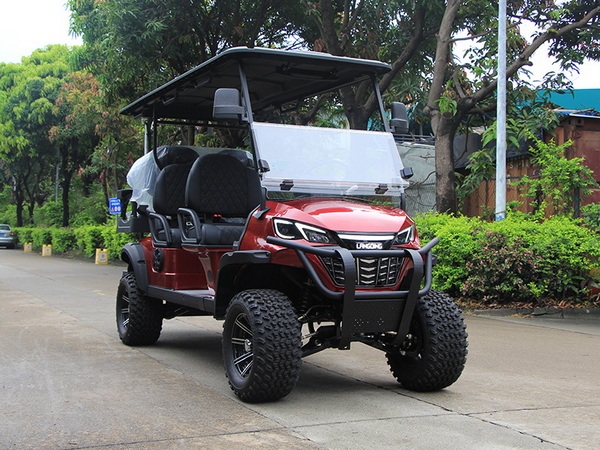
Practical Steps to Check How Many Batteries Your Golf Cart Has
Many buyers and fleet managers inherit existing carts and need to confirm exactly how many batteries are installed and how they are wired. A simple step-by-step check avoids errors when ordering replacements or planning upgrades.
Step-by-Step Battery Inspection
1. Park and power off the cart
- Set the parking brake, turn the key off, and remove it before opening any compartments.
2. Open the battery compartment
- On most golf carts, batteries sit under the seat; in some utility or multi-row models, they may be under a rear seat or central access panel.
3. Count the individual batteries
- Count each visible battery case as one unit, regardless of its voltage rating.
4. Check the voltage labels
- Each battery should have a sticker or stamping showing 6V, 8V, 12V, or a higher nominal rating in the case of lithium modules.
5. Calculate system voltage
- Multiply the voltage of one battery by the number of batteries wired in series. For example, 6 × 8V equals 48V.
6. Verify with the nameplate or manual
- Compare your calculation with the cart's identification plate or user manual to confirm the correct system voltage and recommended replacement configuration.
For large fleets, documenting each cart's pack layout in a maintenance log helps streamline future battery changes and range planning.
Choosing the Right Battery Setup for Your Application
Different use cases require different electric golf cart battery strategies, especially when you consider terrain, load, daily mileage, and charging infrastructure.
Light-Duty Golf Course and Residential Use
- 36V or 48V systems with conventional lead-acid packs remain suitable for standard 18-hole rounds and gated community driving.
- Six 8V batteries or eight 6V batteries at 48V can offer comfortable runtime for typical daily use at a moderate cost.
Resort, Tourism, and Commercial Fleet Use
- Resorts, hotels, airports, and industrial parks often prefer 48V or 72V carts for higher torque and uptime.
- Lithium packs are increasingly used in these fleets because they support opportunity charging, fast charging, and higher cycle counts.
Off-Road, Hunting, and Utility Carts
- Lifted and utility carts operating on hills or in off-road conditions benefit from 48V or 72V systems with robust capacity.
- In these applications, the right battery count and chemistry can prevent voltage sag under heavy load and keep performance stable across the discharge curve.
Quick Reference: Typical Battery Counts by System Voltage
The table below summarizes commonly used configurations for electric golf cart batteries in mainstream markets.
System type | Typical configuration | Battery chemistry | Usual battery count | Typical use case |
36V cart | 6 × 6V in series | Lead-acid deep cycle | 6 batteries | Older carts, basic golf course use |
48V cart | 6 × 8V in series | Lead-acid deep cycle | 6 batteries | Mainstream golf and residential carts |
48V cart | 8 × 6V in series | Lead-acid deep cycle | 8 batteries | Extended-range 48V setups |
48V cart | 4 × 12V in series | Lead-acid deep cycle | 4 batteries | Compact 48V packs with fewer units |
48V cart | 1 × 48V lithium pack | LiFePO4 lithium | 1 battery | Modern conversions and OEM lithium carts |
72V cart | 6 × 12V in series | Lead-acid deep cycle | 6 batteries | High-performance and commercial carts |
72V cart | 1–2 × 72V lithium packs | LiFePO4 lithium | 1–2 batteries | Premium performance, long-range fleets |
OEM Perspective: Custom Battery Solutions for Global Buyers
Professional manufacturers and OEM suppliers can customize electric golf cart battery systems for global brands, distributors, and fleet operators. A factory specializing in golf carts and small electric vehicles can design chassis, controllers, and battery compartments around 36V, 48V, or 72V lead-acid or lithium packs according to the target market.
From an OEM perspective, battery configuration decisions typically consider:
- Target terrain and climate in the customer's country
- Required range per charge and daily duty cycle
- Local charger standards and availability of service centers
- Buyer preference for low initial cost versus low lifecycle cost and premium performance
By integrating battery engineering into the cart design from the beginning, OEM partners help brands launch ready-to-sell, market-specific electric golf carts rather than generic one-size-fits-all models.
Actionable Buying Tips for Electric Golf Cart Batteries
When selecting or upgrading electric golf cart batteries, decision-makers should follow a simple framework that looks beyond just the number of batteries.
- Define your daily mileage, load, and terrain profile.
- Choose system voltage (36V, 48V, or 72V) that matches performance expectations and budget.
- Decide between lead-acid and lithium based on upfront budget, maintenance capabilities, and planned replacement cycles.
- Confirm pack layout (battery count and voltage) using the cart's manual or professional support.
- Plan charger compatibility, storage conditions, and maintenance routines before placing large orders.
Clear Call to Action: Design Your Ideal Electric Golf Cart Battery Solution
If you are a brand owner, wholesaler, or manufacturer planning your next golf cart product line or fleet project, treating the battery system as a strategic component will significantly improve performance and customer satisfaction. Work with an experienced OEM factory that specializes in electric golf carts and small EVs to define the optimal voltage, battery chemistry, and pack layout for your target markets. By collaborating early in the design phase, you can build electric golf carts with the right battery count, range, and reliability to win repeat business from courses, resorts, communities, and commercial operators worldwide.
Contact us to get more information!
FAQs About Electric Golf Cart Batteries
1. How many batteries does a typical electric golf cart use?
Most electric golf carts use between four and eight batteries, depending on the voltage system and battery type. Common lead-acid setups include six 6V batteries for 36V, six or eight batteries for 48V, and up to six 12V batteries for 72V carts.
2. Do 48V carts always use more batteries than 36V carts?
Not always. A 36V cart might use six 6V batteries, while a 48V cart could use four 12V batteries or six 8V batteries, so the total battery count can be similar or even lower. What changes is the voltage and total capacity, not just the number of individual units.
3. Can I replace lead-acid batteries with a single lithium pack?
Many modern lithium kits are designed as single-pack replacements for 36V or 48V lead-acid banks, reducing the number of batteries to one integrated module. However, compatibility with your charger, controller, and physical compartment must be checked carefully before conversion.
4. How does battery count affect maintenance?
More batteries mean more terminals to clean, more connections to inspect, and more cells to maintain in flooded lead-acid systems. Lithium systems with one or two packs dramatically cut routine maintenance tasks because they do not require watering and come in sealed enclosures.
5. When should I consider upgrading from 36V to 48V or 72V?
An upgrade makes sense if your cart feels underpowered on hills, carries heavy loads, or needs longer daily range than a 36V system can comfortably provide. Moving to 48V or 72V, especially with lithium, can improve torque, speed, and range, but often requires controller, motor, and charger changes.
Citations:
1. https://golfcarts.com/how-many-batteries-are-used-in-electric-golf-carts/
2. https://hartvillegolfcarts.com/how-many-batteries-do-golf-carts-have/
3. https://www.weizeus.com/blogs/weize/how-many-batteries-does-your-golf-cart-require
4. https://leochlithium.us/how-many-batteries-does-a-golf-cart-take-a-complete-guide-to-golf-cart-battery-configurations-maintenanc
5. https://boltenergyusa.com/golf-cart-battery-voltage-explained/
6. https://wis-tek.com/blogs/knowledge/difference-between-36v-48v-and-72v-lithium-golf-cart-batteries-explained
7. https://enjoybot.com/pages/deep-cycle-lifepo4-golf-cart-battery
8. https://fleetlithium.com/blogs/news/fleet-lithium-golf-cart-battery-application-guide-u-s-market
9. https://www.deepcyclesystems.com.au/product/golf-series-batteries-48v-60ah-3kwh/
10. https://avebattery.com/blog/top-48v-golf-cart-batteries-to-watch-in-2025/


