Content Menu
● What Is the Average Golf Cart Price in 2026?
● Key Factors That Influence Golf Cart Prices
>> 1. Powertrain: Electric vs Gas
>> 2. Size and Seating Capacity
>> 3. Battery Type and Capacity
>> 4. Brand and Build Quality
>> 5. Customization and Accessories
● New vs Used Golf Carts: Which Is Better Value?
>> Typical Price Ranges
>> When a New Golf Cart Makes Sense
>> When a Used Golf Cart Makes Sense
● Electric Golf Cart Prices and Long Term Savings
>> Typical Electric Price Bands
>> Why Electric Often Costs Less Over Time
● Golf Cart Battery Costs in 2026
>> Lead Acid Battery Replacement Costs
>> Lithium Ion Battery Replacement and Conversion Costs
● Insurance Costs for Golf Carts
● Hidden and Ongoing Ownership Costs
>> 1. Maintenance and Repairs
>> 2. Charging and Energy Costs
>> 3. Tires, Brakes, and Accessories
● Practical Steps to Decide Your Golf Cart Budget
● Example: Matching Budget to Use Case
● Why Work With an OEM Electric Golf Cart Factory Like LANGQING?
● Clear Call to Action
● Frequently Asked Questions (FAQ)
>> 1. Is an electric golf cart cheaper than a gas one in the long run?
>> 2. How often do I need to replace golf cart batteries?
>> 3. What is a reasonable budget for a first golf cart?
>> 4. Are lithium golf cart batteries worth the higher price?
>> 5. Do I need insurance for a golf cart?
● Citations:
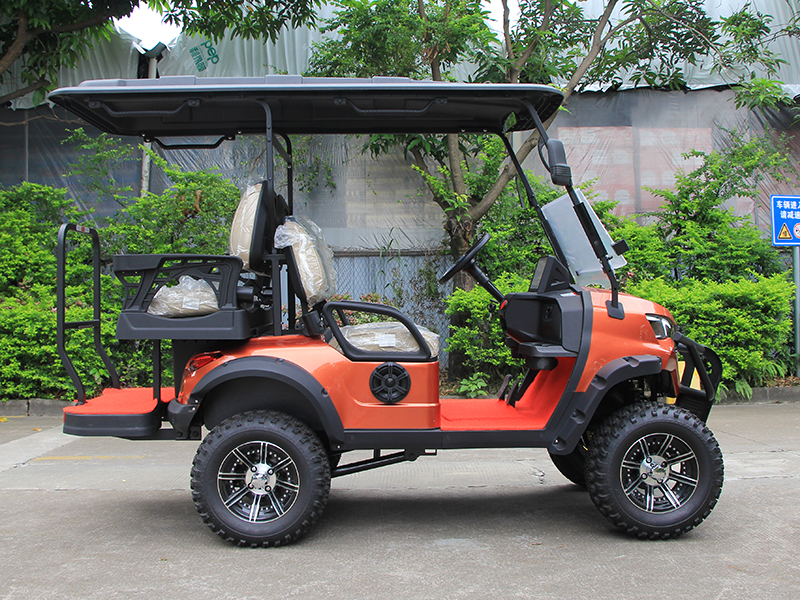
If you are wondering how much a golf cart costs in 2026, most buyers can expect to pay between $5,000 and $18,000 for a new golf cart, while used golf carts generally range from $2,000 to $8,000 depending on brand, condition, and features. At the very high end, custom or commercial models can exceed $20,000 when fully equipped with premium options.
What Is the Average Golf Cart Price in 2026?
For most private buyers, there is a clear “typical” price band.
- New basic 2 seat carts: about $5,000–$7,500 for entry level electric or gas models with standard equipment.
- Mid range 4 seat neighborhood carts: around $8,000–$12,000 with upgraded styling, better seats, lights, and accessories.
- Premium 4–6 seat or lifted models: typically $12,000–$18,000, with some luxury builds going higher.
- Used carts in good condition: often $2,000–$8,000, depending heavily on age, battery or engine health, and previous usage.
As an OEM electric vehicle factory, LANGQING generally positions its OEM golf carts in the mid range and premium bands, allowing overseas brands and distributors to offer strong specs at competitive landed costs in their local markets.
Key Factors That Influence Golf Cart Prices
Several core variables drive the final price you pay.
1. Powertrain: Electric vs Gas
- Electric golf carts usually cost slightly more upfront but less to operate over the long term, thanks to lower energy and maintenance costs.
- Gas golf carts may have higher torque and top speed, particularly for hilly terrain or heavy duty use, but regular engine service makes long term ownership more expensive.
Over a 10 year period, electric golf carts often cost significantly less to own than gas carts, primarily due to savings in fuel and maintenance.
2. Size and Seating Capacity
- 2 seat golf carts are usually the most affordable, optimized for golf courses and compact communities.
- 4 seat and 6 seat models command higher prices because of larger frames, more materials, and higher capacity power systems.
3. Battery Type and Capacity
- Lead acid batteries: Lower upfront cost but heavier, require more maintenance, and usually last 3–5 years.
- Lithium ion batteries: Higher purchase price, often $1,000–$3,000 for a full set or conversion, but lighter, with faster charging and longer service life (up to 8–10 years).
Higher voltage or higher capacity packs for extended range also raise the overall vehicle price.
4. Brand and Build Quality
- Well known retail brands often charge a premium for design, dealer networks, and after sales support.
- OEM factories like LANGQING supply private label golf carts that allow importers and wholesalers to use better component specs at similar or lower final retail prices by optimizing the supply chain and configuration.
5. Customization and Accessories
Adding features can quickly move a cart from “basic” to “premium”:
- Lift kits, alloy wheels, and off road tires
- Luxury seats, upgraded steering wheel, and dashboards
- Street legal lighting kits, turn signals, mirrors, and windshields
- Infotainment, USB ports, and weather enclosures
Each option adds incremental cost but can significantly increase perceived value and resale potential.
New vs Used Golf Carts: Which Is Better Value?
Choosing between a new and a used golf cart is primarily a trade off between budget and risk.
Typical Price Ranges
Type | Typical Price Range | Key Benefits | Key Risks or Trade offs |
New electric cart | $5,000–$18,000 | Full warranty, modern tech, zero mileage | Higher upfront cost |
New gas cart | $7,500–$20,000+ | Strong torque, better for hills | More maintenance, higher fuel costs |
Used electric cart | $2,000–$8,000 | Lower upfront cost | Battery age and condition risk |
Used gas cart | $2,000–$8,000 | Cheaper entry point | Unknown engine wear, potential repair expenses |
When a New Golf Cart Makes Sense
Choose new if you:
- Want a full warranty and predictable running costs.
- Need specific OEM configuration, such as seating, payload, or street legal packages.
- Plan to brand the cart as part of your own product line, which is ideal for importers using LANGQING OEM services.
When a Used Golf Cart Makes Sense
A used golf cart is attractive if you:
- Have a limited upfront budget.
- Only use the cart occasionally or seasonally.
- Have access to local service that can inspect and refurbish the vehicle.
However, you must carefully check battery health for electric carts and engine compression or service history for gas models to avoid unexpected repair costs.
Electric Golf Cart Prices and Long Term Savings
Electric golf carts dominate many communities and resorts because the total cost of ownership is often lower.
Typical Electric Price Bands
- Entry level electric carts: around $5,000–$8,000 with basic equipment.
- Mid range 4 seat electric models: typically $9,000–$12,000.
- High end or custom electric carts: $12,000–$20,000+, especially for luxury brands or commercial fleets.
Why Electric Often Costs Less Over Time
- Lower maintenance: No oil changes, fuel filters, or spark plugs; the primary long term cost is battery replacement.
- Lower “fuel” cost: Charging is usually significantly cheaper than gasoline per mile in most markets.
- Less wear on components due to fewer moving parts in the drive system.
When you factor in charging, service, and battery life, electric carts frequently deliver a lower cost per mile than gas alternatives, especially in high usage environments.
Golf Cart Battery Costs in 2026
Battery choice is one of the most important decisions when calculating lifetime golf cart costs.
Lead Acid Battery Replacement Costs
- A complete set of lead acid batteries for a standard 36 V or 48 V golf cart typically costs $500–$800, plus $100–$200 labor if installed professionally.
- Higher end AGM or larger packs can cost $800–$1,500.
- Expect 3–5 years of life with proper maintenance, including water level checks, terminal cleaning, and correct charging.
Lithium Ion Battery Replacement and Conversion Costs
- A full set of lithium ion golf cart batteries generally ranges from $1,000–$3,000, depending on voltage and capacity.
- For lithium conversion kits from reputable brands, an average DIY conversion often costs around $2,350, with high capacity setups reaching $3,000 or more.
- Lithium packs can last up to 8–10 years, offer longer range, faster charging, and lower weight.
For fleet managers and distributors, lithium OEM configurations from factories like LANGQING can reduce total operating cost per mile, especially in resorts, campuses, and large residential communities where carts run all day.
Insurance Costs for Golf Carts
Golf cart insurance is relatively affordable compared to automotive insurance, but it is still a key budget item.
- Basic liability insurance often starts at about $75 per year for low risk use.
- More comprehensive coverage, including collision, theft, and accessories, may reach around $300 per year, depending on location, usage, and insured value.
Factors that affect your premium include:
- Coverage level, such as liability only vs full coverage with accessories.
- Location, since different regions have different regulations and risk levels.
- Usage, including on course only, gated community, or mixed public road use.
- Security, such as locked garages, GPS tracking, and anti theft features.
Fleet buyers and commercial users, such as resorts, hotels, and industrial parks, usually negotiate specialized policies that cover multiple vehicles and drivers under one umbrella policy.
Hidden and Ongoing Ownership Costs
Beyond the purchase price, a realistic budget should include several ongoing items.
1. Maintenance and Repairs
- Gas golf carts: Annual engine service, including oil, filter, spark plugs, and fuel system, is often $150–$300 per year.
- Electric golf carts: Routine maintenance is lower, but plan for battery replacement every 4–8 years, costing $500–$3,000 depending on chemistry.
2. Charging and Energy Costs
- Electricity usage for an electric golf cart is modest; in many regions, fully charging a cart costs only a small fraction of a gasoline fill.
- Commercial or community fleets sometimes install centralized charging stations to optimize off peak electricity rates and extend battery life.
3. Tires, Brakes, and Accessories
- Tires, brake pads, and suspension parts wear gradually and need periodic replacement.
- Additional spending on seat covers, storage boxes, canopies, and electronics also accumulates over the life of the vehicle.
Practical Steps to Decide Your Golf Cart Budget
To avoid overspending or under buying, follow a simple framework.
1. Clarify primary use
Decide if your cart is for golf course usage, neighborhood transport, resort fleet, industrial logistics, or tourism. Different use scenarios require different ranges, payloads, and configurations.
2. Define seating and range needs
Decide between 2 seats, 4 seats, or 6 seats, and estimate typical daily mileage and maximum distance between charges.
3. Choose electric or gas
- Electric: Best for quiet, low emission, low maintenance usage.
- Gas: Suited for steep terrain, remote areas, or heavy hauling.
4. Decide on battery type
- Lead acid: Lower purchase price, more maintenance, shorter life.
- Lithium ion: Higher upfront cost, longer life, faster charging, lower weight.
5. Set a realistic total budget
Include purchase price, insurance, maintenance, and battery replacement over at least 5–10 years.
Example: Matching Budget to Use Case
Imagine a coastal resort that needs 20 quiet, low maintenance carts to move guests between villas and restaurants.
- Use case: Light passenger transport, short trips, high daily utilization.
- Optimal configuration: 4 seat electric carts with lithium batteries, fast chargers, and corrosion resistant chassis.
- Budget strategy: Pay more upfront for lithium and durable components to reduce downtime, maintenance visits, and electricity cost per trip over the next 8–10 years.
For this kind of scenario, partnering directly with an OEM like LANGQING allows the resort or local distributor to:
- Customize seating, branding, and accessories at the factory level.
- Optimize battery specification and charger configuration for local grid conditions.
- Control long term fleet cost by standardizing parts and maintenance cycles.
Why Work With an OEM Electric Golf Cart Factory Like LANGQING?
For overseas brands, wholesalers, and manufacturers, sourcing directly from a specialized Chinese golf cart and low speed EV factory offers several strategic advantages.
- Tailored OEM or ODM solutions: Adjust body design, seating layout, battery system, and accessories to match your market's regulations and customer expectations.
- Flexible power options: Offer both lead acid and lithium variants, or electric vs gas, under your own brand with unified styling.
- Better margin structure: Optimize cost through factory direct sourcing, while still maintaining high spec components and safety standards.
- Scalable production: Ramp up orders as your brand grows in local communities, resorts, industrial parks, and tourism projects.
For importers and private label brands, this is often the fastest path to a complete product line of golf carts and small EVs without building your own manufacturing capacity.
Clear Call to Action
If you are a brand owner, wholesaler, or manufacturer looking to launch or upgrade your own line of golf carts in 2026, now is the ideal time to act.
Contact LANGQING, a professional Chinese OEM factory specializing in electric golf carts and other low speed EVs, to:
- Get customized quotations based on your target price segment and features.
- Develop private label models that match your local market regulations.
- Build a sustainable, profitable product line with reliable long term supply.
Share your target price range, seating capacity, and key features with the LANGQING team today, and start designing the optimal OEM golf cart solution tailored to your market.
Contact us today to get more information!
Frequently Asked Questions (FAQ)
1. Is an electric golf cart cheaper than a gas one in the long run?
Over about 10 years, electric golf carts often cost less to own than gas carts because of lower fuel and maintenance costs, even when you include battery replacements. If you plan to use your cart frequently, especially in communities or resorts, electric is usually the more economical option.
2. How often do I need to replace golf cart batteries?
Lead acid batteries typically last 3–5 years, while lithium packs can last up to 8–10 years depending on usage, charging habits, and maintenance quality. Heavy daily use or poor charging practices can shorten battery life, so consistent maintenance is important.
3. What is a reasonable budget for a first golf cart?
For most private buyers, a reasonable starting budget is $7,000–$12,000 for a new mid range electric or gas cart with solid equipment. If you are comfortable with some wear and are willing to inspect the cart carefully, $3,000–$6,000 is often enough for a good used unit.
4. Are lithium golf cart batteries worth the higher price?
Lithium batteries cost more upfront, often $1,000–$3,000 for a full set or conversion, but they last longer, charge faster, and reduce maintenance. For intensive or fleet use, the lower operating cost and reduced downtime usually make lithium a smart long term investment.
5. Do I need insurance for a golf cart?
Many jurisdictions recommend or require at least basic liability coverage, especially if you drive on public roads or in shared community spaces. Even when it is not mandatory, insurance helps protect you against accidents, property damage, and theft, making it a sensible part of ownership.
Citations:
1. https://www.kandiamerica.com/how-much-does-a-golf-cart-cost/
2. https://carts-and-parts.com/how-much-does-a-golf-cart-cost/
3. https://thecartfinder.com/2024/06/30/how-much-is-a-golf-cart/
4. https://www.gowithgarretts.com/how-much-do-golf-carts-cost/
5. https://www.alibaba.com/product-insights/how-much-is-a-new-golf-cart-in-2026.html
6. https://www.vacarsandcarts.com/electric-vs-gas-carts-choose-the-best-golf-cart/
7. https://www.golf-energy.com/how-much-does-it-cost-to-replace-batteries-in-a-48-volt-golf-cart/
8. https://manlybattery.com/how-much-to-replace-golf-cart-batteries/
9. https://golfcartsearch.com/blog/how-much-is-a-golf-cart-pricing-buyers-guide-2025
10. https://golfcartsearch.com/blog/electric-vs-gas-golf-cart-comparison-2026
11. https://www.golfcarttiresupply.com/lithium-golf-cart-batteries/


