Content Menu
● What This Guide Covers
● What Is the Average Speed of an Electric Golf Cart?
● Key Factors That Determine Electric Golf Cart Speed
>> Battery Voltage and Capacity
>> Motor Power and Controller Settings
>> Terrain and Driving Conditions
>> Passenger and Cargo Load
● Typical Speed Ranges by Use Case in 2026
● How to Accurately Measure Your Cart's Speed
>> Smartphone GPS Speed Apps
>> Speed Radar Gun
● Can You Make an Electric Golf Cart Faster?
>> Upgrading the Speed Controller
>> Increasing Battery System Voltage
>> Other Common Performance Tweaks
● Electric vs Gas Golf Carts: Speed and Use Cases
>> Speed and Performance
>> Noise, Emissions, and Maintenance
● Safety and Legal Considerations at Higher Speeds
● The Future of Electric Golf Cart Speed and Technology in 2026
● When to Choose a Faster Electric Golf Cart
● Reach Your Ideal Speed With a Professional OEM Partner
● Take the Next Step: Design Your 2026‑Ready Electric Golf Cart Fleet
● FAQ
>> Q1: Are electric golf carts faster than gas golf carts?
>> Q2: How does the speed of a golf cart compare to a regular car?
>> Q3: Can the speed of a golf cart be dangerous?
>> Q4: What is the best speed for a golf course fleet?
>> Q5: Do I need special approval to use a faster electric golf cart on public roads?
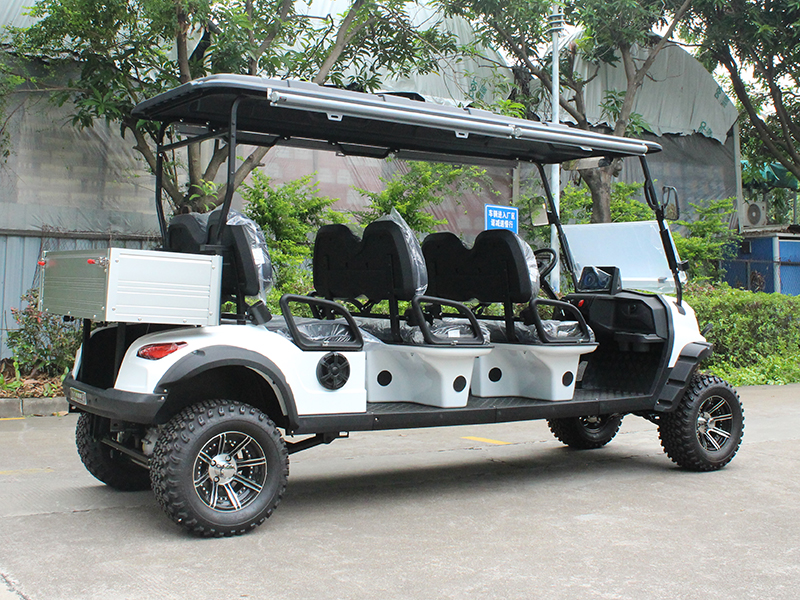
Electric golf carts now play a major role far beyond golf courses, and their speed ranges from about 12–15 mph for standard fleet units up to around 20–25 mph for upgraded or street‑legal configurations. For brand owners, wholesalers, and OEM partners, understanding how and why electric golf cart speed varies is essential for designing the right product for each market.
What This Guide Covers
- Typical electric golf cart speed ranges on course and on road
- Key technical and real‑world factors that influence top speed
- Practical methods to measure and safely increase cart speed
- Electric vs gas golf cart speed and main use scenarios
- Safety, compliance, and OEM configuration advice for 2026
What Is the Average Speed of an Electric Golf Cart?
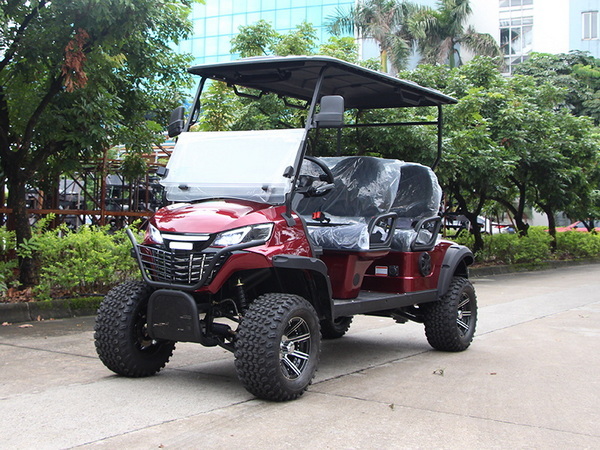
Most standard electric golf carts are engineered to run at an average of 12–15 mph, which is ideal for golf courses, resorts, gated communities, and many commercial settings. Newer performance or street‑oriented models can be configured to reach about 20–25 mph when properly designed and compliant with local regulations.
Typical ranges you can expect in 2026:
- 12–15 mph: Standard golf course or rental fleet cart focused on safety and runtime.
- 18–20 mph: Lightly upgraded carts in private communities, resorts, or campuses.
- 20–25 mph: Street‑legal neighborhood electric vehicles (NEVs) in areas where the law allows their use on specific roads.
If your use case includes residential streets, larger resorts, or campuses, a target speed of 20–25 mph often delivers a better balance between travel efficiency, comfort, and safety than low‑speed fleet configurations.
Key Factors That Determine Electric Golf Cart Speed
Several technical characteristics and real‑world conditions work together to determine how fast an electric golf cart will actually go in daily operation. Understanding these factors helps you specify the right configuration at the OEM level.
Battery Voltage and Capacity
Batteries are the core determinant of both speed and acceleration in an electric golf cart. Higher system voltage allows the motor to spin faster and deliver more power, especially under load.
Key points:
- Higher voltage systems, such as 48V compared with legacy 36V setups, usually support higher top speeds and better hill‑climbing ability.
- Larger battery capacity (measured in ampere‑hours) helps maintain speed for longer distances with less voltage drop.
For brands and OEM buyers, choosing the right battery chemistry and voltage platform is a direct way to control the speed segment of a model line.
Motor Power and Controller Settings
The electric motor and the speed controller work together to define acceleration, torque, and maximum speed. Even if the motor has high potential, the controller can limit how much power it actually delivers.
Consider the following:
- Motor design (rated power, torque curve, maximum RPM) defines the theoretical performance envelope.
- The controller's programmed speed limit and current limit determine practical top speed and how aggressively the cart accelerates.
- Many fleets use software speed limits to meet internal safety policies or local rules.
For private label or OEM projects, configurable controllers allow different speed profiles on the same platform for different markets.
Terrain and Driving Conditions
Real‑world speed always depends on where and how the cart is driven. Brochure numbers usually assume ideal, flat conditions.
Common scenarios:
- Uphill terrain and rough surfaces reduce top speed and increase current draw.
- Flat, paved surfaces allow the cart to reach its rated top speed more easily.
- Wet grass, sand, gravel, or mud increase rolling resistance and demand more torque.
When specifying carts for hilly golf courses, resorts, or industrial parks, you should assume lower average speeds than the official top speed and plan your fleet size accordingly.
Passenger and Cargo Load
The total weight of passengers plus cargo has a direct impact on both acceleration and top speed. A fully loaded cart behaves very differently from a single‑passenger test drive.
Key impacts:
- More passengers, golf bags, luggage, or tools increase the load on the motor.
- Higher load slows the cart, shortens range, and can increase component temperatures.
For commercial operators and OEM buyers, it is important to estimate typical payloads when deciding on motor power, voltage, and speed limits.
Typical Speed Ranges by Use Case in 2026
Use case | Typical speed range (mph) | Notes |
Golf course fleet carts | 12–15 | Safety-focused, suitable for mixed-skill drivers. |
Resort and hotel shuttles | 15–20 | Balances guest comfort with efficient transfers. |
Residential and gated communities | 18–25 | Speed often regulated by local ordinances. |
Industrial and commercial facilities | 15–20 | Emphasis on torque and payload, not maximum speed. |
Street-legal NEVs (where allowed) | Up to about 25 | Must comply with low-speed vehicle or NEV regulations. |
These ranges give OEM partners and buyers a clear framework when positioning products for different markets.
How to Accurately Measure Your Cart's Speed
Knowing the true speed of your cart is important for safety, compliance, and realistic marketing. There are simple methods that work well for both individual owners and fleet managers.
Smartphone GPS Speed Apps
Using a smartphone GPS speed app is one of the easiest ways to measure real‑world speed.
Practical steps:
1. Install a reliable GPS speedometer app on your smartphone.
2. Ensure GPS or location services are enabled and accurate.
3. Mount the phone securely in the cart rather than holding it in your hand.
4. Drive a straight, flat section at full throttle and note the average speed reading.
This approach is usually accurate enough for routine checks and OEM validation during early testing.
Speed Radar Gun
For more controlled performance testing, a radar gun offers more formal measurement.
Basic procedure:
1. Position an operator with a radar gun at the side of a safe, straight test path.
2. Have the driver accelerate smoothly to full speed and pass the radar point.
3. Repeat several runs in both directions and average the readings to reduce wind or slope influence.
Radar testing is especially useful for documenting claimed speeds in product literature and for dealer demonstrations.
Can You Make an Electric Golf Cart Faster?
Many owners and fleet operators want to know if and how they can safely increase cart speed. The short answer is yes, but every upgrade must be managed carefully to keep a balance between performance, safety, and legal requirements.
Upgrading the Speed Controller
The speed controller regulates how much power flows from the batteries to the motor, and it often includes software speed limits.
Typical benefits of a controller upgrade:
- Higher programmable speed limit and improved acceleration response.
- Better control over torque delivery for hills or heavy loads.
- Flexibility to set different speed profiles for different drivers or applications.
Any controller upgrade should be professionally configured to avoid issues such as overheating, excessive current draw, or damage to the motor and batteries.
Increasing Battery System Voltage
Moving to a higher voltage system is one of the more effective ways to increase top speed and overall performance.
Key considerations:
- Upgrading from 36V to 48V or higher can increase motor RPM and torque.
- This usually requires compatible batteries, controller, charger, and sometimes a new motor.
- Wiring, fuses, and safety components must be correctly sized for higher voltage and current.
For new product development and OEM projects, designing the chassis and electrical system around a higher‑voltage architecture from the beginning is usually more cost‑effective than retrofitting.
Other Common Performance Tweaks
Beyond controller and voltage changes, several smaller optimizations can improve practical speed and responsiveness:
- Using tires with lower rolling resistance and appropriate diameter.
- Keeping tires properly inflated and aligned.
- Reducing unnecessary weight from accessories or cargo.
- Maintaining batteries in good condition with correct charging routines.
While each of these changes may only add small gains individually, together they help the cart achieve and maintain its intended speed more consistently.
Electric vs Gas Golf Carts: Speed and Use Cases
When comparing electric and gas golf carts in 2026, speed is only one part of the equation, but it remains an important consideration in product selection and OEM design.
Speed and Performance
- Gas carts often deliver higher top speeds in stock form, especially in performance‑oriented models.
- Electric carts can be tuned for strong low‑speed torque and stable speed under many conditions, even if ultimate top speed is slightly lower.
For many customers, the smooth acceleration and predictable behavior of an electric cart are more valuable than a small advantage in top speed.
Noise, Emissions, and Maintenance
Electric carts bring several key advantages that make them attractive for modern resorts, communities, and industrial users:
- Quiet operation suitable for noise‑sensitive environments such as golf courses and residential streets.
- No local exhaust emissions, supporting greener operations and better air quality.
- Simpler mechanical systems and lower routine maintenance compared with internal combustion engines.
Gas carts, in contrast, produce more noise and emissions and require more frequent servicing, which can affect both user comfort and operating costs.
Safety and Legal Considerations at Higher Speeds
As electric golf carts become faster and more widely used off the course, safety and legal compliance become critical, especially for passenger transport and public road use.
Important safety elements include:
- Properly functioning brakes that match the cart's weight and speed capability.
- High‑quality steering and suspension components to maintain stability at higher speeds.
- Safety features such as seat belts, mirrors, lights, turn signals, and warning devices where required.
From a legal standpoint, many regions set clear rules for what qualifies as a low‑speed vehicle or NEV, including speed limits, equipment standards, and where these vehicles may operate. Operators and OEMs must ensure that:
- Vehicle top speed complies with the relevant category of road use.
- Lighting, reflectors, and safety equipment meet local regulations.
- Drivers understand and follow posted speed limits and community rules.
Ignoring these factors can expose operators and brands to safety incidents, liability issues, and regulatory penalties.
The Future of Electric Golf Cart Speed and Technology in 2026
By 2026, electric golf carts and small electric vehicles continue to evolve from simple course transport into versatile mobility solutions for tourism, logistics, and private communities. Speed performance is closely connected to broader advances in vehicle technology.
Notable trends include:
- Smarter controllers and drive systems that optimize torque, speed, and efficiency automatically.
- Improved battery technology that supports longer range at higher average speeds.
- Upgraded chassis, braking, and suspension systems to safely handle multi‑terrain and higher‑speed use.
For brand owners, wholesalers, and OEM partners, these trends create new opportunities to position products not just as traditional golf carts but as flexible low‑speed electric vehicles tailored to specific industries and environments.
When to Choose a Faster Electric Golf Cart
For many decision‑makers, the practical question is not only how fast electric golf carts can go, but how fast they should go for a specific application in 2026.
Scenarios where a faster cart (around 20–25 mph) makes sense:
- Large resorts, campuses, or communities where distances between destinations are long.
- Shuttle services that need to move guests or staff quickly without using full‑size vehicles.
- Neighborhoods or regions that explicitly support NEV‑class vehicles on designated public roads.
Scenarios where moderate speeds (around 12–15 mph) are more appropriate:
- Traditional golf courses where safety and turf protection are top priorities.
- Rental fleets used by mixed‑experience drivers, including tourists and occasional users.
- Environments with tight layouts, frequent turns, or many pedestrians.
Thinking through these scenarios helps OEM buyers, brand owners, and operators choose the right balance of speed, comfort, and safety for their fleets.
Reach Your Ideal Speed With a Professional OEM Partner
Electric golf carts have grown into a highly customizable category, with speeds ranging roughly from 12 mph to about 25 mph depending on design, components, and regulations. The most successful products match their speed and performance precisely to the needs of their users.
By working with a specialized OEM manufacturer, you can:
- Define target speed classes and performance profiles for each model or market.
- Select optimized combinations of battery voltage, motor power, and controller programming.
- Integrate safety features, comfort options, and branding elements that meet your positioning and compliance needs.
When you partner with an experienced factory, you gain not only manufacturing capacity but also engineering support to ensure that your carts deliver the right speed, range, and reliability for 2026 and beyond.
Take the Next Step: Design Your 2026‑Ready Electric Golf Cart Fleet
If you are a brand owner, wholesaler, or manufacturer planning your next electric golf cart or low‑speed EV project, this is the right moment to align speed, safety, and performance with market expectations for 2026. Whether you need safe 12–15 mph fleet carts for golf courses or agile 20–25 mph NEVs for communities and resorts, a professional OEM partner can help you define every technical detail. Contact our team today to discuss your target speed range, usage scenarios, and customization requirements so that together we can build electric golf carts that carry your brand further, faster, and safer.
Contact us today to get more information!
FAQ
Q1: Are electric golf carts faster than gas golf carts?
In most stock configurations, gas golf carts can reach higher top speeds than standard electric carts because combustion engines often deliver more continuous power. Electric carts, however, can be tuned for strong low‑end torque and smooth, predictable acceleration, which many users find more valuable than a small speed advantage.
Q2: How does the speed of a golf cart compare to a regular car?
Even the faster electric golf carts are much slower than regular passenger cars. Typical electric carts run around 12–15 mph, with some models reaching about 20–25 mph, while standard cars are designed for highway travel at much higher speeds, often 60 mph or more.
Q3: Can the speed of a golf cart be dangerous?
Yes, golf cart speed can be dangerous if the cart is poorly maintained, overloaded, driven recklessly, or operated in unsuitable areas. Higher speeds increase stopping distance and the risk of rollovers or collisions, which is why proper safety features, driver training, and strict adherence to speed limits are essential.
Q4: What is the best speed for a golf course fleet?
For most golf courses, a capped speed of roughly 12–15 mph provides a safe balance between pace of play and control. This range is fast enough to keep rounds moving smoothly while still being manageable for older players, beginners, and rental customers unfamiliar with the course layout.
Q5: Do I need special approval to use a faster electric golf cart on public roads?
In many regions, using a faster, street‑oriented electric golf cart on public roads requires compliance with specific NEV or low‑speed vehicle regulations. These rules typically define a maximum speed, required safety and lighting equipment, and the types of roads where such vehicles are allowed, so you should always verify local laws before operating on public streets.


