Content Menu
● What “Steep” Really Means for Electric Golf Carts
● Key Factors That Control Climbing Ability
● Typical Climbing Ranges and Real‑World Scenarios
● High‑Performance Electric Carts and Hill Climbing
● 48 V vs 72 V Systems for Hills
>> Performance Differences
● Recommended Maximum Slopes by Use Scenario
● Practical Steps to Safely Climb Steep Hills
● Safety and Braking on Steep Descents
● When to Choose a Hill‑Optimized OEM Golf Cart
● Configure a Hill‑Ready OEM Electric Golf Cart
● FAQs: Electric Golf Cart Climbing Ability
>> 1. How steep can a standard electric golf cart safely climb?
>> 2. Do 72 V electric golf carts climb hills better than 48 V models?
>> 3. How much does passenger and cargo weight affect climbing ability?
>> 4. Can tire choice really change how well a golf cart climbs hills?
>> 5. Is regenerative braking enough to control speed on steep downhill slopes?
● Citations:
Electric golf carts can typically climb inclines of about 20–30 degrees when properly designed and equipped, but the safe, real‑world limit depends heavily on motor torque, battery voltage, load, and terrain conditions. High‑performance models are engineered to handle steeper hills than many standard carts, which makes configuration and specifications critical when choosing or OEM‑configuring a cart for hilly environments.
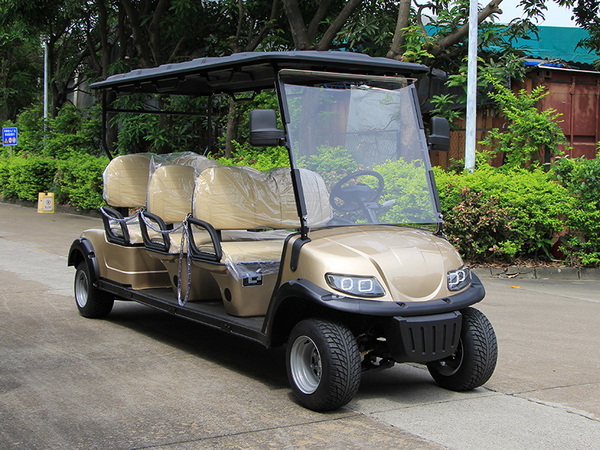
What “Steep” Really Means for Electric Golf Carts
When talking about how steep a golf cart can climb, manufacturers use gradeability expressed either as degrees or percentage slope. A 20% grade means the hill rises 20 units vertically for every 100 units horizontally, which is about 11.3 degrees. Many golf courses and residential communities are designed with slopes in the 10–15 degree range, which most modern electric golf carts can handle comfortably when correctly specified.
Most standard electric golf carts are engineered to safely climb slopes up to around 20 degrees under their rated load and with healthy batteries. Upgraded or specially designed carts can push toward 25–30 degrees in the right conditions, but this should always be verified against the manufacturer's specifications and tested carefully in real‑world use.
For better readability and user experience, this section is a good place to insert a simple diagram or chart showing degree versus percentage slope, for example 10°, 15°, 20°, 25°, and 30° mapped to grade percentages, helping readers visualize what “steep” means in practice.
Key Factors That Control Climbing Ability
Several interacting factors determine how confidently an electric golf cart can climb hills. Understanding these helps owners, fleet managers, and OEM buyers choose the right configuration and operate safely.
1- Motor power and torque
- Torque is the rotational force that actually pushes the cart up the hill and is more important for climbing than peak horsepower or top speed.
- High‑torque motors and well‑matched controllers allow the cart to maintain speed on inclines instead of bogging down or overheating.
2- Battery voltage and capacity
- Higher voltage systems such as 48 V and 72 V provide more power and stronger torque at the wheels, helping the cart tackle steeper slopes with less strain.
- Adequate amp‑hour capacity and a good state of charge are essential, because climbing hills with low batteries can dramatically reduce performance and increase stress on components.
3- Total weight and load distribution
- Passenger count, cargo, accessories, and even battery chemistry affect vehicle weight; heavier loads require significantly more torque to climb the same hill.
- Poor weight distribution can reduce traction on the drive wheels, leading to wheel spin or unstable handling on steeper grades.
4- Tires and terrain
- On paved paths, carts enjoy more traction and can approach their rated gradeability, while wet grass, loose gravel, or sand reduce safe climbing angles.
- Off‑road or all‑terrain tires can improve grip on uneven surfaces but may slightly reduce efficiency on smooth pavement.
To enhance visual appeal, you can add a compact comparison chart here that contrasts “flat course,” “moderate hills,” and “steep resort or community” with recommended motor power, voltage, and tire type for quick scanning.
Typical Climbing Ranges and Real‑World Scenarios
In real applications, the safe climbing range is narrower than the theoretical maximum. Users care about what the cart can do consistently without overheating, slipping, or draining the battery too quickly.
1- Everyday golf and residential use
- Many standard electric golf carts comfortably handle 10–15 degree slopes on courses and neighborhood roads, especially at 48 V with a properly matched motor.
- Course and community designers generally avoid extreme slopes on long paths for safety and drainage reasons, which aligns with this typical range.
2- Upper limit for standard designs
- Around 20 degrees is a common design target for maximum slope under rated load for many mainstream electric carts.
- At this level, maintaining speed and stability depends heavily on motor tuning, total weight, and traction, and some users may notice slowing on long, sustained climbs.
3- Enhanced and performance‑oriented setups
- Upgraded 48 V carts with high‑torque motors, quality lithium batteries, and optimized controllers can tackle steeper hills while holding speed better than older lead‑acid setups.
- Specialized or heavily modified carts can climb very steep inclines beyond normal use, but such demonstrations are not a substitute for everyday safety margins.
For stronger visual impact, consider a line chart in this section that shows “slope angle vs typical use case,” with bands for standard carts, upgraded 48 V carts, and high‑performance or hilly‑terrain carts.
High‑Performance Electric Carts and Hill Climbing
High‑performance electric golf carts, including many modern 48 V platforms, are specifically engineered for better hill‑climbing than basic entry‑level models. They are often chosen for hilly courses, resorts, and residential communities where steep routes are unavoidable.
1- Higher gradeability than basic carts
- While many standard carts are aimed at slopes around 15–20% grade, premium high‑torque designs are built for steeper terrain and heavier loads in everyday use.
- These vehicles combine robust motors, optimized gear ratios, and efficient controllers to maintain climbing performance without sudden power drop‑off.
- Real‑world hill feedback from users
- Owners of premium 48 V golf carts often report that, after moving to modern lithium packs and tuned controllers, their carts climb steep neighborhood roads with minimal speed loss compared to stock setups.
- This behavior underlines the importance of system integration: motor, controller, battery, and gearing must all work together for confident hill‑climbing.
To make this section more intuitive, you can add an illustrative powertrain diagram that highlights motor, controller, and battery as a connected system delivering torque to the wheels on an incline.
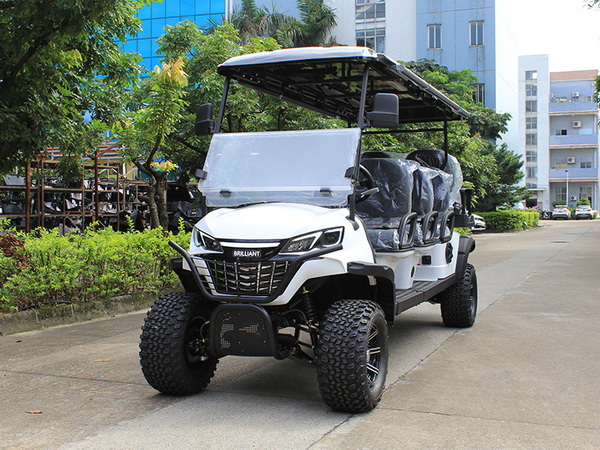
48 V vs 72 V Systems for Hills
For buyers and OEM customers planning to use carts in hilly resorts, gated communities, or industrial sites, choosing between 48 V and 72 V configurations has a direct impact on climbing performance and long‑term operating cost.
Performance Differences
1- Torque and climbing ability
- 72 V systems deliver more torque at the motor for the same current, improving hill‑climbing with heavy loads and reducing strain on components in steep environments.
- A properly engineered 48 V system remains sufficient for most golf courses and moderate hills, especially when paired with a high‑torque motor and efficient lithium battery pack.
2- Speed, range, and efficiency
- 72 V carts typically achieve higher top speeds and can maintain better acceleration on inclines, which is useful on long hills or mixed‑speed routes.
- Both 48 V and 72 V systems can provide strong range, but 72 V platforms may run more efficiently at a given power output, depending on controller tuning and driving habits.
A compact comparison table here helps users choose the right voltage for their terrain and application.
Recommended Maximum Slopes by Use Scenario
The table below summarizes practical target slopes for different environments. Values are for typical modern electric carts under rated load; individual models must always be checked against their specific specifications.
Use scenario | Typical slope range (degrees) | Approx. grade (%) | Recommended system and setup |
Flat golf courses | 0–10 | 0–18 | 36–48 V, standard motor and standard turf tires. |
Moderately hilly courses | 10–15 | 18–27 | 48 V, high-torque motor, quality batteries, standard or mild all-terrain. |
Hilly residential communities | 15–20 | 27–36 | 48 V or 72 V, high-torque motor, lithium battery, controller tuned for hills. |
Steep resort or industrial terrain | 20–25 (with care) | 36–46 | 72 V or advanced 48 V performance setup, strong traction tires, strict adherence to OEM specs. |
A second table, focusing on “maximum recommended slope vs passenger load,” can further enhance usability for fleet managers configuring carts for specific routes and capacities.
Practical Steps to Safely Climb Steep Hills
Beyond technical specs, safe and confident hill‑climbing depends heavily on how the cart is driven and maintained. The following steps provide a practical, user‑friendly checklist.
1. Know your cart's rated gradeability
Always check the manufacturer's stated maximum slope and avoid exceeding it, especially with a full load of passengers and cargo.
2. Check battery state and condition before climbing
Ensure batteries are well charged and in good condition. Weak or unbalanced packs can cause power loss or overheating on long inclines.
3. Manage speed and momentum
Approach hills with moderate speed and maintain steady throttle rather than abrupt full‑throttle bursts, which increase heat and strain on the drive system.
4. Avoid overloading and uneven weight distribution
Stay within the cart's rated payload and position cargo so that it does not lift weight off the drive wheels, which can cause traction loss.
5. Use appropriate tires and maintain them
Keep tires properly inflated and matched to the terrain. For frequent off‑road hills, consider all‑terrain patterns to improve grip on loose or wet surfaces.
This section lends itself well to a visual checklist graphic, breaking each step into an icon and one short line of text for quick reference.
Safety and Braking on Steep Descents
Climbing is only half of the equation; controlled descending is equally important for user safety and component longevity.
- Braking systems and speed control
- Many modern electric carts use regenerative braking and electronic speed control to manage downhill speed, which can also recover a small amount of energy and protect mechanical brakes.
- On very steep hills, drivers should still keep speeds low and avoid riding the brakes continuously, which can cause heat buildup and brake fade.
- Stability and rollover risk
- Exceeding the recommended slope, especially when turning on a hill or driving across a side slope, increases rollover risk and can cause loss of control.
- Operators should always ascend and descend in a straight line, avoid sudden steering inputs, and never attempt steep hills with worn tires or compromised suspension.
A simple slope‑angle illustration that highlights safe versus unsafe zones, plus “do” and “do not” icons, can significantly improve safety awareness at a glance.
When to Choose a Hill‑Optimized OEM Golf Cart
For brands, wholesalers, and fleet operators sourcing carts from an OEM manufacturer, matching the vehicle design to the operating environment is critical to long‑term performance, safety, and customer satisfaction.
- Scenarios that need enhanced climbing
- Mountain resorts, hillside communities, industrial campuses with ramps, and golf courses with long, sustained gradients should prioritize high‑torque motors and higher‑voltage systems.
- Operations frequently carrying four or more passengers, tools, or heavy cargo require stronger drivetrains and carefully selected gear ratios to maintain performance and avoid overheating.
- Key configuration decisions for buyers
- Choosing between 48 V and 72 V platforms, specifying lithium batteries, defining maximum passenger load, and selecting tire type can all be tuned at the OEM level to optimize hill‑climbing.
- Working with a specialized manufacturer allows brand owners and fleet buyers to validate climbing performance through targeted testing on representative slopes before rolling out a full fleet.
A route profile chart, showing distance versus elevation for a typical course or community, is an excellent visual to explain why certain hill‑optimized configurations are recommended.
Configure a Hill‑Ready OEM Electric Golf Cart
If your market includes hilly golf courses, resorts, or residential communities, specifying the right climbing capability is essential for safety, reliability, and user satisfaction. Instead of relying on generic, one‑size‑fits‑all carts, you can work directly with a dedicated OEM factory to define your maximum slope, passenger load, terrain type, and branding requirements. By partnering with a professional manufacturer, you gain access to tailored 48 V and 72 V solutions, high‑torque powertrains, lithium battery options, and tire setups specifically engineered for your routes.
Contact our OEM team now to discuss your terrain, request a custom hill‑climbing configuration proposal, and start building electric golf carts that climb confidently, protect your riders, and strengthen your brand in the high‑value hilly‑terrain market.
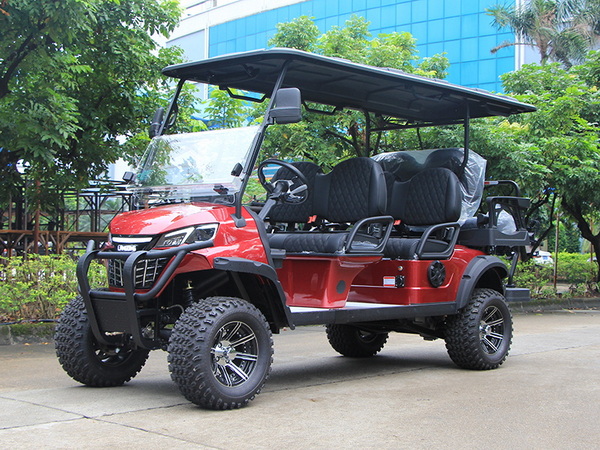
FAQs: Electric Golf Cart Climbing Ability
1. How steep can a standard electric golf cart safely climb?
Most standard electric golf carts are designed to safely climb slopes of up to about 20 degrees under their rated load and with healthy batteries. This range suits the majority of golf courses and gently hilly residential areas. Beyond this limit, performance and safety depend heavily on configuration, traction, and driver behavior.
2. Do 72 V electric golf carts climb hills better than 48 V models?
Yes, 72 V systems generally provide more torque and stronger hill performance, especially under heavy loads or on long, sustained inclines. However, a well‑designed 48 V cart with a high‑torque motor and efficient lithium battery pack can handle moderate hills very effectively. The better choice depends on your terrain, payload, and speed requirements.
3. How much does passenger and cargo weight affect climbing ability?
Additional passengers and cargo significantly increase the torque required to climb the same slope. As weight rises, the maximum climbable angle may decrease, and the cart will slow more noticeably on steep sections. Staying within the rated payload and distributing weight evenly is essential for maintaining safe and predictable hill‑climbing performance.
4. Can tire choice really change how well a golf cart climbs hills?
Tire tread and condition play a major role in traction, especially on wet grass, gravel, or dirt. Appropriate off‑road or all‑terrain tires can improve grip on loose or uneven surfaces, while worn or under‑inflated tires limit safe climbing and braking. Selecting the right tire type for your main terrain and keeping tires properly maintained will noticeably improve hill performance.
5. Is regenerative braking enough to control speed on steep downhill slopes?
Regenerative braking helps control speed and can recover some energy, but it should not be the only line of defense on very steep or extended descents. Drivers should use low speeds, stay within the cart's rated slope limit, and rely on a combination of regen and mechanical brakes as recommended by the manufacturer. Good driving habits and proper maintenance remain essential for safe downhill operation.
Citations:
1. https://evolutionelectricvehicle.com/how-steep-can-an-electric-golf-cart-climb-lets-break-it-down-with-evolution/
2. https://www.volgagolfcart.com/how-steep-can-an-electric-golf-cart-climb/
3. https://www.langqinggolfcart.com/how-steep-can-an-electric-golf-cart-clime.html
4. https://www.langqinggolfcart.com/what-incline-can-a-electric-golf-cart-climb.html
5. https://wis-tek.com/blogs/knowledge/choosing-between-72v-and-48v-golf-carts-a-detailed-comparison
6. https://taraelectricvehicles.com/blog/2025/07/17/how-steep-can-a-golf-cart-climb-factors-to-consider/
7. https://www.aykinland.com/electric-golf-cart-climbing-ability/
8. https://taraelectricvehicles.com/blog/2025/06/13/best-electric-golf-cart-for-hills-top-models-for-climbing-steep-terrain/
9. https://solanaev.com/evolution-golf-cart-review/
10. https://www.golfclubatlas.com/forum/index.php?topic=3552.0


