Content Menu
● What Determines the Minimum Age to Drive a Golf Cart?
● U.S. State-by-State Minimum Age: Key Patterns
>> General Trends in the United States
>> Example Age Requirements by State
● Do Golf Cart Drivers Need a License?
>> When a License Is Required
>> When a License Is Often Not Required
● Age Limits on Private Property: Golf Courses, Resorts, and Communities
>> Golf Courses
>> Resorts and Vacation Properties
>> Gated and Retirement Communities
● Can Children Drive a Golf Cart?
>> Expert-Oriented Age Guidelines
● How to Teach a Child or Teen to Drive a Golf Cart Safely
>> Step 1: Pre-Drive Safety Briefing
>> Step 2: Learning the Controls
>> Step 3: First Practice Drives in a Safe Area
>> Step 4: Real-World Practice and Limitations
● Essential Safety Features for Golf Carts in 2026
>> Core Safety Features
>> Additional Features Recommended for Families and Communities
● Pro Tips for Resorts, Communities, and Golf Courses
>> Define a Clear Age and License Policy
>> Implement a Simple Safety Orientation
>> Use Signage and Physical Cues
>> Support Policy with Technology
● Conclusion: How Old Must You Be to Drive a Golf Cart?
● Final Call to Action
● FAQ: Golf Cart Driving Age and Safety
>> 1. What is the youngest age to drive a golf cart in the United States?
>> 2. Can a 14-year-old drive a golf cart in Florida?
>> 3. Does a golf cart driver need a license on public roads?
>> 4. What age is safe for a child to drive a golf cart?
>> 5. How can I make golf carts safer for teens and kids?
● Citations:
There is no single worldwide rule: the minimum age to drive a golf cart depends on the country, state or province, type of road, and local community rules. In most places, the legal driving age ranges from 14 to 18 years old, and drivers aged 16 or above with a valid license are almost always allowed on public roads. For parents, resort owners, and communities using golf carts, aligning real-world practice with local law and sound safety guidelines is essential to avoid accidents and liability.
This complete 2026 guide explains how age, license requirements, and local rules work together, and gives practical steps to keep children, teens, and guests safe while using golf carts.
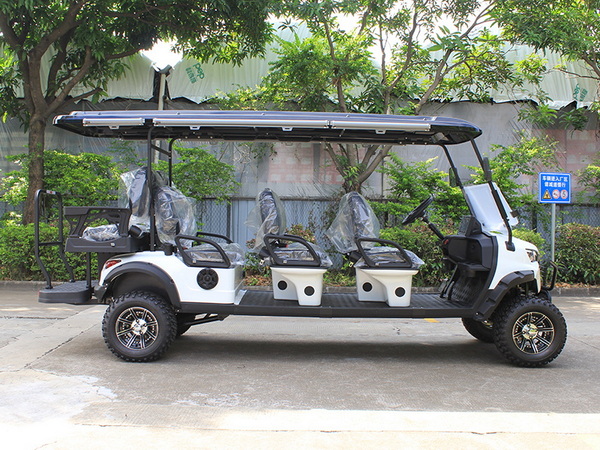
What Determines the Minimum Age to Drive a Golf Cart?
Three main factors control how old someone must be to legally drive a golf cart:
1. Jurisdiction (country, state or province, city)
National laws set broad rules, but states, provinces, and local municipalities can impose stricter age limits and equipment requirements.
2. Type of road or property
- Public roads and streets
- Private roads in gated communities
- Golf courses
- Resorts and vacation properties
- Private driveways and farmland
3. Type of vehicle
- Standard golf cart, typically limited to about 15–20 mph (24–32 km/h)
- Low-speed vehicle (LSV) or neighborhood electric vehicle (NEV), street-legal and often capable of 25–35 mph (40–56 km/h)
Because of these variables, the same person might be allowed to drive a cart on a golf course at age 14 but not be allowed on public roads until age 16 with a license. Any golf cart policy must therefore be tailored to local law and the specific use scenario.
U.S. State-by-State Minimum Age: Key Patterns
General Trends in the United States
In the United States, rules differ significantly from state to state, but some patterns are common:
1- On private property, such as golf courses, farms, and private resort roads, many states allow drivers from about 13 to 16 years old, often without a license, assuming owner permission and supervision.
2- On public roads, most states require:
- A valid driver's license or, in some cases, a learner's permit with supervision.
- A minimum age between 14 and 18 years, depending on the state and whether the vehicle is a standard golf cart or an LSV.
3- LSV and NEV rules are stricter than standard golf cart rules, because these vehicles are considered more like roadgoing automobiles:
- Typically, drivers must be at least 16.
- A valid driver's license, registration, and insurance are often required.
- The vehicle must meet defined safety standards, including lights, mirrors, seat belts, and sometimes a vehicle identification number.
Example Age Requirements by State
The table below presents typical patterns in several major states. Exact requirements vary by locality and may change, so operators should always verify the latest regulations with state and local authorities.
State | Minimum Age (Private Property, Typical) | Minimum Age (Public Roads, Typical) | License Required on Public Roads |
Florida | Around 14 years | Around 14–16 years, locality dependent | Often yes |
California | Around 13–14 years | 16 years or above | Yes |
Texas | Around 14–16 years | 16 years | Yes |
New York | Around 14–16 years | 16 years | Yes |
Georgia | Around 12 or above with supervision | 16 years | Yes |
South Carolina | Around 14–16 years | 16 years | Yes |
Alabama | Often 18 for use on public highways | 18 years | Yes |
For operators, communities, and B2B buyers, this means that any deployment strategy for golf carts in the United States must be coordinated with local transportation, traffic, and community regulations, not just national guidelines.
Do Golf Cart Drivers Need a License?
When a License Is Required
A license is typically required in the following situations:
- Driving on public roads, including local streets that connect communities, resorts, or golf courses.
- Operating a vehicle classified as an LSV or NEV, which are often treated similarly to small cars, even at low speeds.
- Driving in urban or suburban areas where golf carts share space with regular vehicles, pedestrians, and cyclists.
In these cases, drivers are generally expected to:
- Hold a valid driver's license.
- Comply with state or provincial registration rules.
- Carry insurance as required by local law.
When a License Is Often Not Required
A driver's license may not be required in these scenarios:
1- Driving exclusively on private property, such as:
- Private golf courses and practice facilities.
- Farms, ranches, and agricultural properties.
- Private estates and gated villas that do not involve public roads.
2- Using carts in private industrial or campus settings, where internal policies govern who may operate vehicles.
Even where the law does not mandate a license, many operators and communities choose to require either a valid license or successful completion of a basic training course for safety and liability reasons.
Age Limits on Private Property: Golf Courses, Resorts, and Communities
Golf Courses
On golf courses, rules are often set by course management rather than government:
1- Some courses allow teens aged 14–16 to drive carts if:
- They are playing golf.
- They have parental or guardian permission.
- They agree to follow course-specific rules.
2- Other courses, especially those with high guest traffic or complex layouts, may require drivers to be at least 18 years old.
3- Many facilities now use safety orientation briefings, short videos, or waiver forms to improve awareness of risks.
Resorts and Vacation Properties
Resort and villa operations often face unique challenges:
1- Resorts may allow guests aged 16 or older to drive carts if:
- They present a driver's license.
- They sign a rental agreement or waiver.
2- Some family-oriented resorts insist that drivers be at least 18 years old, regardless of local law, to simplify risk management.
3- Rules typically take into account:
- The mix of pedestrians, cyclists, and carts.
- The presence of hills, narrow paths, or shared roads.
- Night-time driving conditions and lighting.
For B2B buyers and OEM customers, this means that offering fleets with configurable speed limits, lighting packages, and safety features is a strong selling point.
Gated and Retirement Communities
Gated and retirement communities often integrate golf carts deeply into daily mobility:
1- Many of these communities set a minimum unsupervised driving age of 16–18 years.
2- A valid driver's license is commonly required, even if state law would allow younger drivers on private roads.
3- Typical community rules include:
- Strict speed limits, often between 10 and 15 mph.
- Limitation to internal roads and paths only.
- Curfews or restricted zones where carts are not allowed.
Communities with older residents or high volumes of visitors often prefer late-model carts with improved braking, better lighting, and seat belts to reduce injury risk and increase comfort.
Can Children Drive a Golf Cart?
Children can sometimes legally drive golf carts on private property, but legality does not always equal safety. Safety experts generally urge caution and recommend conservative age limits.
Expert-Oriented Age Guidelines
A practical safety-focused framework is:
1- Under 6 years: Children should not ride in golf carts and should never drive.
2- Ages 6–12: Children should only be passengers and only when seated properly and supervised closely.
3- Ages 13–15: Teens may be allowed to drive in very controlled environments:
- On private property.
- At low speeds.
- With an experienced adult supervising in the cart.
4- 16 and above: Generally appropriate for driving, especially with a license, formal instruction, and a vehicle equipped with basic safety features.
Parents and property managers should always balance local law with the physical and emotional maturity of the child, plus the risk environment in which the cart is used.
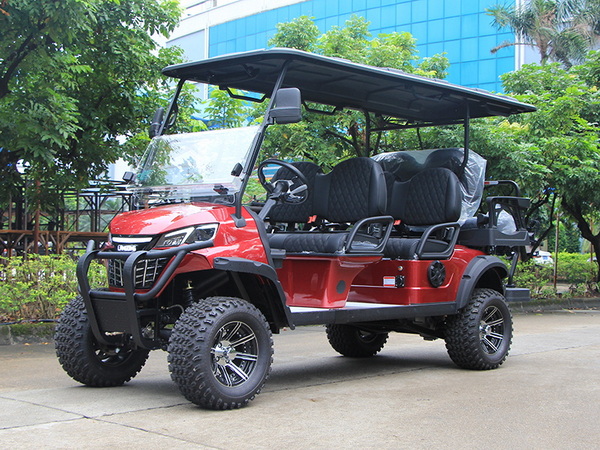
How to Teach a Child or Teen to Drive a Golf Cart Safely
Teaching a young driver to operate a golf cart should be planned and structured, similar to learning to drive a car but in a more controlled setting.
Step 1: Pre-Drive Safety Briefing
Before starting the engine, set the foundation:
1- Clarify roles and expectations:
- The adult is the instructor.
- The student must follow instructions without argument.
2- Explain basic rules:
- Always keep hands and feet inside the cart.
- Only drive in designated areas.
- Absolutely no racing or sudden maneuvers.
3- Cover emergency basics:
- How to stop the cart quickly but safely.
- How to turn off the ignition.
- What to do if a pedestrian or animal suddenly appears.
Step 2: Learning the Controls
With the cart still off, walk through all controls:
- Key switch and ignition positions.
- Pedal layout and the difference between accelerator and brake.
- Direction selector, including forward, neutral, and reverse.
- Horn, lights, turn signals, and parking brake if present.
Have the learner practice moving the direction selector and pressing pedals gently while the cart is stationary. This builds muscle memory without risk.
Step 3: First Practice Drives in a Safe Area
Use a large, open, flat space such as an empty parking lot or a private straight path:
1. Start with very low-speed forward driving in a straight line.
2. Practice smooth stops: release the accelerator and then apply the brake gradually.
3. Introduce gentle turns at low speed, emphasizing the risk of tipping if turns are too sharp or too fast.
4. Practice reversing slowly, with deliberate scanning and head turns.
Throughout this phase, the adult should remain in the cart, ready to intervene instantly if needed.
Step 4: Real-World Practice and Limitations
After the learner can handle basic maneuvers:
- Gradually add slightly more complex tasks, such as parking near a curb or turning around safely.
- Repeat clear limitations:
- No use on public roads unless laws and licensing allow it.
- No passengers standing or hanging off the cart.
- No driving in poor weather or at night without appropriate lighting.
This structured approach reduces accidents and improves confidence for both the learner and the supervising adult.
Essential Safety Features for Golf Carts in 2026
Safety expectations for golf carts have increased significantly, especially in communities, resorts, and commercial environments. Key safety features directly affect how appropriate a vehicle is for younger or inexperienced drivers.
Core Safety Features
Modern carts used in public or semi-public areas should provide:
- Seat belts for all seating positions to reduce the risk of ejection during turns, collisions, or rollovers.
- A roll-over protection structure or protective frame to maintain survival space if the cart tips.
- A speed governor or limiter to cap top speed at a level suitable for the usage scenario.
- A complete lighting package, including headlights, brake lights, turn signals, and reflectors to improve visibility at dawn, dusk, and night.
Additional Features Recommended for Families and Communities
For environments where children and older adults are common, the following features can add extra protection:
- Rearview and side mirrors for better situational awareness.
- Impact-absorbing bumpers to mitigate low-speed impacts.
- Child-lock or immobilization systems to prevent unauthorized use by young children.
- Optional doors or side guards, especially for higher-speed applications.
Manufacturers and fleet buyers increasingly view these features as essential, not optional, for safe, long-term use of carts in mixed-traffic environments.
Pro Tips for Resorts, Communities, and Golf Courses
Operators responsible for fleets of golf carts should combine regulatory compliance with internal policies and technology to create a safe ecosystem.
Define a Clear Age and License Policy
Draft a written policy that is easy to communicate and enforce. For example:
- Minimum age to drive a cart: 16 years.
- Licensing:
- Valid driver's license required for unsupervised driving.
- Younger teens only with adult supervision and on private internal roads.
- Explicit restrictions:
- No alcohol or drug impairment.
- No overloading beyond rated passenger capacity.
This document should be part of rental contracts, membership agreements, or community regulations.
Implement a Simple Safety Orientation
Before a driver uses a cart, require:
- A brief safety orientation, either in person or via a short video.
- Confirmation that the driver understands key rules.
- A signed acknowledgment or waiver for liability and behavioral expectations.
For frequent users such as residents, one orientation session can cover a longer period, with reminders posted on notice boards or digital platforms.
Use Signage and Physical Cues
Support your rules with visual cues:
- Speed limit signs along main cart paths.
- “No carts beyond this point” signs in sensitive areas.
- Painted lines and designated parking spots for carts.
Physical design, such as speed bumps or narrow gates, can also help discourage misuse.
Support Policy with Technology
Technology can automate some enforcement:
- Speed governors configured by the manufacturer or fleet manager.
- GPS tracking and geofencing in large communities or resorts to restrict carts to safe zones.
- Telematics systems that log harsh braking or speeding, allowing managers to identify unsafe drivers or situations.
When combined with training, these tools help maintain safety and reduce insurance and maintenance costs.
Conclusion: How Old Must You Be to Drive a Golf Cart?
There is no universal answer to the question of how old someone must be to drive a golf cart. The correct answer depends on:
- The legal framework of the country, state or province, and municipality.
- Whether the cart is used on public roads or entirely on private property.
- The type of vehicle and its safety equipment.
- The internal policies of the course, resort, or community.
As a rule of thumb:
- The legal minimum in many places ranges from 14 to 18 years.
- On public roads, drivers are usually 16 or older and must hold a valid driver's license.
- Children under 16 should only drive in strictly controlled private settings, and many safety experts recommend reserving driving privileges for older teens and adults.
Golf cart managers, parents, and property owners should combine local law, safety best practices, and appropriate equipment to ensure that golf carts remain convenient, efficient, and safe.
Final Call to Action
If you are a resort owner, community manager, golf course operator, or B2B buyer looking for safe, reliable, and compliant golf carts, partnering with a specialized manufacturer is essential. LangQing is a professional Chinese factory focused on designing and producing golf carts and other small electric vehicles for international brands, wholesalers, and manufacturers, with flexible OEM and ODM service. Contact LangQing today to discuss your project, customize safety features like seat belts and speed limiters, and build a tailored fleet solution that meets your local regulations and keeps your drivers and passengers safe.
FAQ: Golf Cart Driving Age and Safety
1. What is the youngest age to drive a golf cart in the United States?
In many areas of the United States, the youngest age to drive a golf cart on private property is between 13 and 16 years old, depending on local rules and supervision. However, this does not usually apply to public roads, where a driver's license and a higher minimum age are typically required. Always check state and local regulations, plus any community or course-specific rules.
2. Can a 14-year-old drive a golf cart in Florida?
In Florida, a 14-year-old may be permitted to drive a golf cart on certain private properties and designated golf cart paths, subject to the rules of the property owner or community. To use a cart on public roads or in street-legal situations, higher age and licensing requirements can apply, and the rules may be stricter in some counties or municipalities. Operators should confirm the latest guidance from local authorities before allowing minors to drive.
3. Does a golf cart driver need a license on public roads?
Yes, in most jurisdictions, a golf cart driver needs a valid driver's license to operate on public roads. In some areas, a learner's permit may be accepted if a fully licensed adult is supervising, but this is not universal. Where carts are classified as LSVs or NEVs, licensing, registration, and insurance requirements typically align more closely with those of small passenger cars.
4. What age is safe for a child to drive a golf cart?
From a safety perspective, children younger than 16 are generally better suited to be passengers rather than drivers. Some families or farms may allow driving from around 13 to 15 years in controlled private settings, provided that the child has proper training, supervision, and access to a cart with modern safety features. Even then, speed should be limited, and driving should be restricted to safe, low-risk areas away from traffic and pedestrians.
5. How can I make golf carts safer for teens and kids?
To make golf carts safer for younger users, focus on three pillars: equipment, training, and rules. Choose carts with seat belts, speed limiters, good lighting, and, where possible, rollover protection. Provide structured training sessions that cover controls, basic driving techniques, and emergency responses. Establish written policies that define minimum age, licensing requirements, allowed areas, maximum speeds, and supervision rules, and enforce them consistently.
Citations:
1. https://golfcartsearch.com/blog/what-is-the-legal-age-to-drive-a-golf-cart
2. https://www.golfcartgarage.com/blog/how-old-to-legally-drive-golf-cart-50-state-list
3. https://taraelectricvehicles.com/blog/2025/05/25/how-old-do-you-have-to-be-to-drive-a-golf-cart-legally
4. https://golfcompletes.com/guides/how-old-to-drive-a-golf-cart-guide
5. https://www.arrivealive.mobi/golf-carts-and-road-safety
6. https://www.nationwidechildrens.org/family-resources-education/700childrens/2025/05/golf-cart-safety
7. https://www.learnyourrights.com/2024/08/22/golf-cart-safety
8. https://www.gcsuperstore.com/golf-cart-safety-tips-for-parents-and-children
9. https://www.jebailylaw.com/golf-cart-safety
10. https://www.kandiamerica.com/golf-cart-licensing-state-regulations-guide


