Content Menu
● What “Fast” Means for an Electric Golf Cart
● Typical Speed Ranges of Electric Golf Carts
● Key Factors That Affect Electric Golf Cart Speed
>> Battery Voltage and Power System
>> Motor and Controller Tuning
>> Terrain and Driving Environment
>> Tire Pressure and Condition
>> Weight, Payload, and Accessories
● Legal Speed Limits for Street‑Legal Electric Golf Carts
● Safe Speed vs. Maximum Speed
● How to Make an Electric Golf Cart Faster (Responsibly)
● When to Choose a Faster Electric Golf Cart
● Why Work with an OEM Manufacturer for Speed‑Optimized Carts
● Clear Call to Action
● FAQs About Electric Golf Cart Speed
>> 1. How fast does a standard electric golf cart go?
>> 2. What is the maximum safe speed for an electric golf cart?
>> 3. Can an electric golf cart go 30 mph?
>> 4. What affects electric golf cart speed the most?
>> 5. Do laws limit how fast an electric golf cart can go on the road?
● Citations:
Electric golf carts typically travel between 12–20 mph in factory configuration, while upgraded or performance‑tuned models can reach 25–30 mph or more in custom builds. For street‑legal low‑speed vehicle (LSV) use, regulations in many regions usually cap an electric golf cart at about 25 mph (40 km/h) to balance convenience with safety.
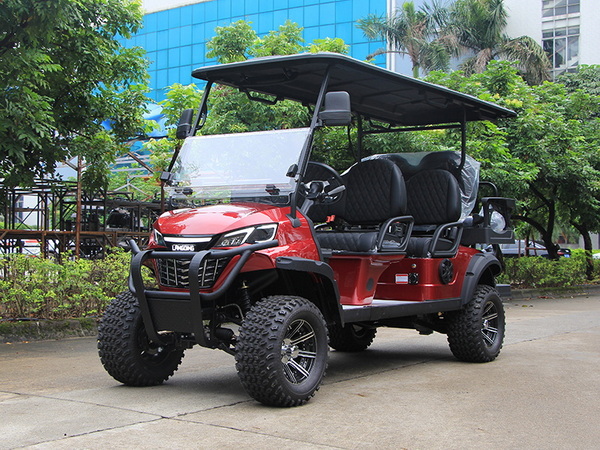
What “Fast” Means for an Electric Golf Cart
For most owners, “how fast do electric golf carts go” really means “how fast should they go for safe daily use in communities, golf courses, and resorts.” Understanding typical speed ranges helps you choose the right configuration instead of chasing unsafe or illegal top speeds.
- Factory electric golf cart speed is usually optimized for control, safety, and battery life, not racing.
- As speed increases, braking distance, rollover risk, and battery drain all rise, especially with extra passengers and cargo.
Typical Speed Ranges of Electric Golf Carts
A standard electric golf cart does not all travel at the same speed; voltage, controller programming, and intended use make a clear difference.
- Most standard electric golf carts run between 12–15 mph, which is enough for golf courses and gated communities.
- Many upgraded electric carts designed for neighborhoods, resorts, or private property can reach 20–25 mph while still staying within common LSV rules.
Electric golf cart type | Typical top speed (mph) | Notes |
Standard 36V electric golf cart | ≈12–14 mph | Entry level, suitable for flat golf courses and short trips. |
Standard 48V electric golf cart | ≈15–19 mph | Better acceleration and hill performance. |
72V or high-performance electric golf cart | ≈20–25 mph | Often positioned as faster neighborhood carts. |
Street-legal LSV electric golf cart | Up to 25 mph | Common regulatory cap for road use. |
Modified performance electric golf cart | ≈25–30+ mph | Requires significant upgrades and careful safety management. |
For buyers comparing brands, it is common to see catalog models listed with published top speeds around 19–25 mph in the “fast electric golf cart” category.
Key Factors That Affect Electric Golf Cart Speed
Even if two carts share the same nominal top speed, real‑world performance varies with several technical and usage variables.
Battery Voltage and Power System
Battery voltage is one of the most important engineering levers for increasing speed in an electric golf cart.
- A 36V electric golf cart typically tops out at about 12–14 mph, making it ideal for basic course use.
- A 48V system usually delivers 15–19 mph and better acceleration, especially with moderate hills and passengers.
- Some 72V or high‑voltage packs support 20–25 mph or higher when paired with a suitable controller and motor.
For fleet managers and OEM customers, choosing lithium battery packs with higher usable capacity can also help maintain speed more consistently over a full day of operation.
Motor and Controller Tuning
The motor and controller work together to enforce the designed top speed and acceleration profile of an electric golf cart.
- Speed controllers can be programmed to limit maximum current and rpm, effectively capping electric golf cart speed for safety or regulatory reasons.
- Upgrading to a higher‑amp controller and torque‑focused motor can increase both hill‑climbing ability and top speed, as long as the rest of the system is matched correctly.
For OEM builds, this is where a manufacturer like LANGQING can configure export models for specific markets, such as governed 19–25 mph carts for U.S. LSV applications or lower‑speed fleets for resorts and courses.
Terrain and Driving Environment
The terrain where an electric golf cart operates has a direct impact on how fast it can safely travel.
- On smooth, flat pavement or fairways, the cart can stay close to its rated top speed, assuming tires and batteries are in good condition.
- On hilly or rough ground, the controller may limit power, and prudent drivers lower their speed to maintain stability and traction.
Fleet owners should define different speed expectations for golf courses, mixed‑use resorts, and off‑road paths instead of trying to use a single speed profile everywhere.
Tire Pressure and Condition
Tire condition is one of the simplest but most frequently overlooked factors that reduces real‑world electric golf cart speed.
- Under‑inflated tires increase rolling resistance, which can cut a cart's effective speed and range.
- Regularly checking for air leaks, uneven wear, or damage helps maintain both speed and safety.
For high‑speed applications, choosing appropriately rated tires with the right tread pattern and load capacity is essential to maintain stability.
Weight, Payload, and Accessories
Every extra passenger, bag, or accessory adds weight, forcing the electric golf cart to work harder at a given speed.
- Passenger weight and cargo can noticeably reduce acceleration and top speed, especially on inclines.
- Heavy add‑ons such as lift kits, larger wheels, or extensive body accessories may look impressive but typically slow the cart and reduce range.
Manufacturers usually publish a recommended payload so that owners can stay within safe operating limits and protect batteries and drivetrains from premature wear.
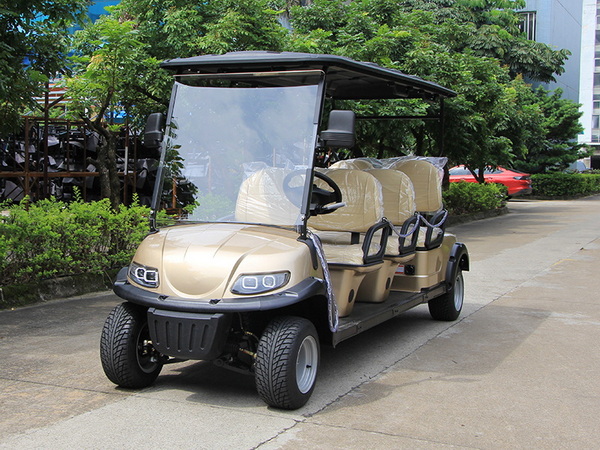
Legal Speed Limits for Street‑Legal Electric Golf Carts
Once an electric golf cart is used beyond private property, speed becomes a regulatory issue as well as a performance question.
- In many markets, including much of North America, street‑legal LSV golf carts are limited to about 25 mph (40 km/h) on public roads.
- Local rules often restrict electric golf carts to roads with posted speed limits below a defined threshold, such as 35 mph, and may require registration, insurance, and driver licensing.
From an OEM perspective, this is why export‑ready electric golf carts are frequently electronically governed and factory‑equipped with lighting, mirrors, and other safety features matching LSV standards.
Safe Speed vs. Maximum Speed
The highest number in a brochure is not always the best speed to use day‑to‑day in a neighborhood or golf resort.
- Safety experts generally recommend keeping electric golf carts within 15–20 mph in crowded or mixed‑use environments to reduce collision and rollover risks.
- At higher speeds, riders are more vulnerable because carts typically lack car‑grade safety features such as crash structures and airbags.
For professional buyers—golf courses, hotels, campuses, and industrial facilities—defining speed policies and using controller‑based limits is an important part of fleet risk management.
How to Make an Electric Golf Cart Faster (Responsibly)
Many owners wonder how fast an electric golf cart can go if they upgrade components, but modifications should always be planned with safety and regulations in mind.
1. Evaluate the current system
- Check battery voltage (36V, 48V, 72V), controller ratings, and motor specs before changing anything.
- Inspect tires, brakes, and suspension to make sure they can handle higher speeds.
2. Upgrade power and control intelligently
- Consider moving from 36V to 48V or higher with appropriate batteries and wiring to gain both torque and speed.
- Install a higher‑amp programmable controller and, if needed, a compatible high‑torque or high‑rpm motor to match the speed target.
3. Optimize rolling and aerodynamics
- Maintain recommended tire pressure and select wheels designed for your speed and terrain.
- Avoid unnecessary weight from oversized accessories if top speed and range are priorities.
4. Respect legal and safety limits
- Ensure that any upgraded electric golf cart intended for public roads remains within the 25 mph LSV cap where applicable.
- If a cart can physically exceed that speed, use electronic limits to keep operation compliant and predictable.
For international buyers, an OEM like LANGQING can deliver factory‑engineered “fast but compliant” electric golf carts that integrate these upgrades safely instead of relying on ad‑hoc aftermarket modifications.
When to Choose a Faster Electric Golf Cart
A higher‑speed electric golf cart makes sense in some use cases but not in others, especially when considering passenger comfort and risk exposure.
1- Good use cases for 20–25 mph:
- Large resorts or campuses where shuttles connect distant facilities.
- Neighborhoods or gated communities with well‑defined low‑speed traffic rules.
2- Better to stay around 12–15 mph:
- Traditional golf courses focused on course protection and pace‑of‑play.
- Crowded pedestrian zones, parks, and family campgrounds.
If you are specifying carts for a new project, matching speed class to environment is more important than simply ordering the fastest available model.
Why Work with an OEM Manufacturer for Speed‑Optimized Carts
For brands, wholesalers, and project developers, working directly with an OEM factory allows speed performance to be engineered, not guessed.
- OEMs can pre‑configure electric golf cart speed profiles (for example, 14 mph for golf courses or 25 mph for street‑legal LSVs) through controller programming and matched powertrains.
- A manufacturer like LANGQING can supply private‑label or OEM electric golf carts with custom voltage, battery chemistry, and safety equipment tailored to your local regulations and user scenarios.
This approach reduces the need for risky aftermarket speed modifications and supports long‑term fleet reliability and warranty coverage.
Clear Call to Action
If your business needs electric golf carts for golf courses, resorts, gated communities, industrial sites, or street‑legal LSV projects, partner with an OEM that understands both speed performance and regulatory requirements. By working with LANGQING, you can define your desired top speed, terrain, and payload profile and receive custom‑engineered electric golf cart solutions for your brand, dealership, or fleet program. Reach out to LANGQING today to discuss your specifications and build a safe, high‑performance electric golf cart lineup that meets the demands of your market.
FAQs About Electric Golf Cart Speed
1. How fast does a standard electric golf cart go?
Most standard electric golf carts travel at around 12–15 mph in factory trim, which is ideal for golf courses and basic community use.
2. What is the maximum safe speed for an electric golf cart?
For most environments, a safe operating range is 15–20 mph, while many street‑legal LSV electric golf carts are limited to 25 mph to meet legal and safety requirements.
3. Can an electric golf cart go 30 mph?
Yes, with upgraded batteries, controllers, and motors, a performance‑tuned electric golf cart can reach 25–30 mph or more, but such speeds are usually restricted to private property and require additional safety measures.
4. What affects electric golf cart speed the most?
The most important influences on speed are battery voltage, controller settings, motor design, terrain, passenger weight, and tire condition, all of which interact to determine real‑world performance.
5. Do laws limit how fast an electric golf cart can go on the road?
In many regions, road‑going electric golf carts classified as low‑speed vehicles must not exceed 25 mph (40 km/h) and are restricted to specific types of roads, with additional requirements for lights, mirrors, registration, and insurance.
Citations:
1. https://ghostgolfconcord.com/how-fast-are-golf-carts/
2. https://hartvillegolfcarts.com/how-fast-do-golf-carts-go/
3. https://www.golfcarttiresupply.com/blog/how-fast-can-a-golf-cart-go/
4. https://www.thecartfinder.com/2024/07/12/how-fast-do-golf-carts-go/
5. https://apacheelectricvehicles.com/blog/electric-golf-carts-how-to-make-them-street-legal-and-their-speed-limits/
6. https://taraelectricvehicles.com/blog/2025/05/26/understanding-golf-cart-top-speed-regulations-and-safety/
7. https://www.golfcartcenter.com/street-legal-golf-carts/street-legal-golf-cart/
8. https://www.kandiamerica.com/how-fast-do-electric-golf-carts-go/
9. https://www.borcart.com/how-fast-can-an-electric-golf-cart-go.html


