Content Menu
● What This Guide Covers
● How Do Electric Golf Carts Work?
● Main Components of an Electric Golf Cart
>> Battery Pack: The Power Source
>> Electric Motor: Turning Electricity into Motion
>> Controller: The “Brain” of the System
>> Accelerator Pedal and Throttle Signal
>> Braking and Regenerative Braking
>> Charger and Charging System
● Step-by-Step: How an Electric Golf Cart Moves
● Electric vs Gas Golf Carts: Power System Overview
>> Power System Differences
● Lead-Acid vs Lithium Batteries in Electric Golf Carts
>> Key Differences
● Practical Use Cases and Design Implications
● Basic Maintenance Tips for Electric Golf Carts
● Action Call: Partner with a Professional OEM Manufacturer
● Frequently Asked Questions (FAQ)
>> 1. How long do electric golf cart batteries last on a single charge?
>> 2. How often should I replace electric golf cart batteries?
>> 3. Can electric golf carts go up steep hills?
>> 4. Is an electric golf cart cheaper to run than a gas cart?
>> 5. Do I need a special outlet to charge an electric golf cart?
● Citations:
Electric golf carts work by using a battery-powered electric motor, controlled by an electronic controller and accelerator pedal, to deliver smooth, quiet torque to the wheels while systems like regenerative braking can recover energy during deceleration. Modern carts combine these core components with smart charging, safety systems, and increasingly with lithium batteries, making them efficient, low-maintenance vehicles for golf courses, resorts, communities, and commercial fleets.
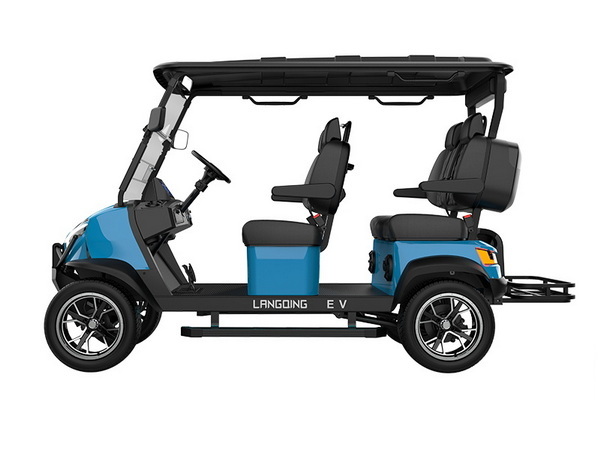
What This Guide Covers
This enhanced guide explains how electric golf carts work, breaks down each key component, and walks through the full power flow step by step. It also includes practical tips, basic data, and examples that many basic guides do not cover, while keeping the reading experience simple and skimmable.
How Do Electric Golf Carts Work?
Electric golf carts operate through a coordinated system of batteries, motor, controller, throttle, braking, and charging, all built around a simple DC power architecture. When the driver presses the accelerator, stored chemical energy in the battery is converted to electrical energy, then to mechanical motion at the motor, finally delivering torque to the wheels through a compact drivetrain.
At a high level, an electric golf cart follows this sequence:
1. The battery pack supplies DC power at a defined system voltage, commonly 36 V or 48 V.
2. The controller regulates how much power reaches the electric motor based on accelerator input.
3. The motor converts electrical energy into rotational motion and drives the wheels via gears and axles.
4. Braking and regenerative systems slow the vehicle and may send energy back to the batteries.
5. An external charger replenishes the battery pack from the grid when the cart is parked.
Main Components of an Electric Golf Cart
Battery Pack: The Power Source
The battery pack stores energy as chemical potential and supplies DC power to the entire electric golf cart system. Most carts use multiple deep-cycle batteries connected in series to reach 36 V, 48 V, or sometimes higher system voltages.
Key points about golf cart batteries include:
- Common battery types
- Flooded lead-acid: traditional, relatively low cost, but requires more maintenance.
- AGM or gel lead-acid: sealed, lower maintenance, higher cost.
- Lithium-ion: lighter, faster charging, longer life, higher upfront price.
- The capacity of the pack (in Ah and Wh) directly influences driving range per charge.
- Battery health strongly affects acceleration, climbing performance, and top speed consistency.
Choosing the right battery type and capacity is critical for achieving the desired balance between cost, range, and performance.
Electric Motor: Turning Electricity into Motion
The electric motor converts DC electrical energy into mechanical rotation to move the golf cart forward or backward. It usually sits near the rear axle and connects to the drivetrain via gears, shafts, or a transaxle assembly.
In simple terms, the motor works like this:
- The batteries deliver DC power to motor windings, creating a magnetic field.
- Interaction between the magnetic field and rotor produces torque, causing the rotor to spin.
- This rotation passes through the powertrain and turns the wheels, providing smooth acceleration.
Most electric golf carts use DC motors designed for high torque at low speeds, which is ideal for hill climbing and stop-and-go driving on courses and in communities.
Controller: The “Brain” of the System
The controller is often described as the brain of an electric golf cart because it manages how much power flows from the battery pack to the motor. It interprets driver inputs and operating conditions to regulate speed, acceleration, and, in some models, regenerative braking.
Core controller functions include:
- Power modulation: Adjusting voltage and current to the motor based on accelerator pedal position.
- Protection: Monitoring temperature, current limits, and faults to prevent damage.
- Drive modes: On some carts, supporting eco, normal, or sport modes with different acceleration curves.
Modern controllers can also integrate with digital displays and diagnostics, providing data such as battery state-of-charge, error codes, and speed. This improves fleet management, service efficiency, and user confidence.
Accelerator Pedal and Throttle Signal
The accelerator pedal in an electric golf cart does not pull on a cable like a traditional gas throttle. Instead, it sends a low-voltage signal to the controller, which then decides how much battery power to deliver to the motor.
In practice:
- Light pedal input means limited power, slower acceleration, and extended range.
- Heavy pedal input means more current to the motor, faster acceleration, and higher instantaneous energy draw.
This electronic design gives precise low-speed control, which is essential on golf greens, narrow paths, and in resort or community environments where smooth, quiet movement is important.
Braking and Regenerative Braking
Electric golf carts use a mix of mechanical braking and regenerative braking to safely slow down. Regenerative braking is a key efficiency advantage of electric systems because it recovers a portion of kinetic energy that would otherwise be lost as heat.
How regenerative braking works:
- When the driver lifts off the accelerator or presses the brake, the controller changes how the motor is driven.
- The motor begins to act as a generator, converting wheel rotation back into electrical energy.
- This energy flows back into the battery pack, slightly extending range and reducing brake wear.
Mechanical disc or drum brakes still provide primary stopping power, especially at low speeds or during emergency stops, ensuring safety and predictable braking distance.
Charger and Charging System
The charger converts AC power from the grid into DC power at the correct voltage and current to safely recharge the golf cart's battery pack. For most owners, charging simply means parking the cart, plugging the charger into a suitable outlet, and letting the system manage the rest.
Charging essentials include:
- Chargers are typically matched to battery chemistry (lead-acid or lithium) and system voltage.
- Many modern chargers include automatic shut-off, staged charging profiles, and temperature compensation to protect battery life.
- Smart onboard chargers may show charge status and estimated time remaining, making planning easier for both individual users and fleet operators.
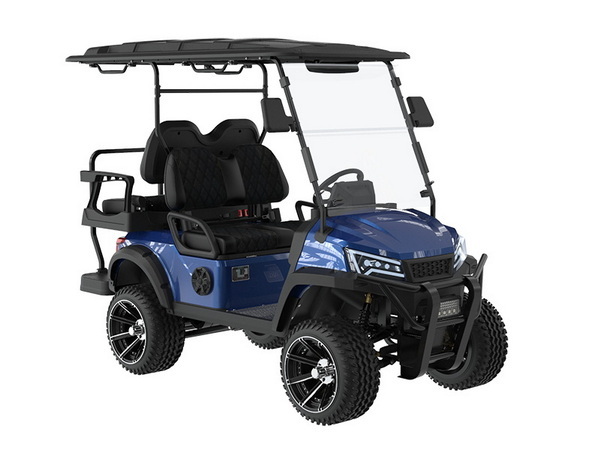
Step-by-Step: How an Electric Golf Cart Moves
This section maps the complete sequence from key-on to key-off to help readers visualize how electric golf carts work from a practical, real-world perspective.
1. Power On
The main switch closes the primary circuit, enabling the controller, main contactor, and accessories such as lights or displays.
2. Throttle Input
The driver presses the accelerator pedal, sending a proportional signal (often via a sensor) to the controller.
3. Controller Output
The controller measures the input and draws the appropriate current from the battery pack, taking into account limits and operating conditions.
4. Motor Activation
The motor receives DC power, generates torque through electromagnetic interaction, and starts turning.
5. Powertrain and Wheels
Torque passes through gears, differential, and axles to the wheels, moving the cart forward or backward depending on the selected direction.
6. Cruising and Speed Regulation
Small changes in pedal position lead to instant adjustments in motor power, keeping speed stable on flat ground or slopes.
7. Deceleration and Regeneration
When the driver reduces throttle or applies the brake, the controller and motor assist in slowing the cart, and regeneration (if equipped) recovers some energy.
8. Power Off
Turning the key off or switching to park opens the main circuit, cutting power to the motor and preventing unintended movement.
Electric vs Gas Golf Carts: Power System Overview
Many readers interested in how electric golf carts work also compare them to gas carts, so this section offers extra context without distracting from the main focus on electric power systems.
Power System Differences
Feature | Electric golf cart system | Gas golf cart system |
Primary power source | Battery pack (DC, usually 36 V or 48 V) | Gasoline tank feeding a small combustion engine |
Main drive unit | Electric motor with electronic controller | Internal combustion engine with mechanical throttle |
Energy conversion | Chemical → electrical → mechanical | Chemical → thermal → mechanical |
Noise and emissions | Very quiet, zero tailpipe emissions on-site | Louder operation with exhaust gases and fumes |
Typical maintenance focus | Batteries, connectors, electronics | Oil, filters, fuel system, engine parts |
Regenerative braking | Common on modern electric carts | Typically not available |
Electric carts excel where quiet, clean operation and low running costs matter, such as golf courses, resorts, gated communities, warehouses, and campuses.
Lead-Acid vs Lithium Batteries in Electric Golf Carts
Battery technology is evolving rapidly, and understanding it is central to how modern electric golf carts work and perform over their lifetime.
Key Differences
Aspect | Lead-acid batteries | Lithium-ion batteries |
Weight | Heavier, adds significantly to vehicle mass | Much lighter for the same capacity |
Usable capacity | Lower usable depth of discharge | Higher usable capacity per cycle |
Charging time | Longer charge times | Faster charging capability |
Maintenance | Often requires water top-offs and cleaning | Low maintenance, sealed packs |
Cycle life | Fewer charge cycles on average | Longer cycle life, but higher upfront cost |
For fleet owners and OEM buyers, the battery choice can change range, payload, hill performance, and total cost of ownership over the cart's lifetime.
Practical Use Cases and Design Implications
Electric golf carts now serve far more than just golfers, and this variety of applications affects how manufacturers design their power systems.
Common applications include:
- Golf courses and country clubs for quiet, turf-friendly transport.
- Resorts and hotels for guest shuttles and luggage transport.
- Industrial sites and warehouses for material handling and staff movement.
- Residential communities, campuses, and parks for low-speed, low-emission mobility.
For each application, OEMs may tune controller maps, gear ratios, battery size, and braking characteristics to provide the right balance of torque, speed, and runtime.
Basic Maintenance Tips for Electric Golf Carts
Understanding how an electric golf cart works makes basic maintenance more intuitive and reduces downtime for owners and fleet operators.
Recommended practices:
1- Battery care
- Keep terminals clean and tight; check for corrosion on lead-acid packs.
- Follow proper charging habits, avoid frequent deep discharges, and store batteries at appropriate charge levels when idle for long periods.
2- Electrical system checks
- Inspect main cables, connectors, and fuses for damage, looseness, or overheating marks.
- Monitor error codes or warning lights on digital displays if the cart is equipped with them.
3- Drivetrain and brakes
- Check tires, suspension, and mechanical brake components regularly for wear and proper function.
- Listen for unusual noises from the motor or differential that may signal issues requiring professional attention.
Regular preventive maintenance supports consistent performance, safer operation, and longer component life for motors, controllers, and batteries.
Action Call: Partner with a Professional OEM Manufacturer
If your brand or facility needs reliable electric golf carts or small electric utility vehicles, working directly with an experienced OEM manufacturer offers far more flexibility and better long-term value than off-the-shelf solutions. A specialized factory can customize battery systems, motor power, controller tuning, body design, and accessories to match your terrain, load requirements, and branding.
As a professional manufacturer of electric golf carts and other small electric vehicles, LANGQING provides:
- OEM and private-label solutions tailored for overseas brands, wholesalers, and assemblers.
- Flexible configurations, including lead-acid or lithium battery systems, 36 V or 48 V power platforms, various seating layouts, and cargo or utility options.
- Engineering support for performance tuning, safety compliance, and component sourcing aligned with your target markets and regulations.
If you are planning a new electric golf cart line or upgrading your existing fleet, now is the best time to talk to a dedicated OEM partner. Contact our team today with your application scenario, target price range, and expected annual volume, and we will help you design and supply the most suitable electric golf cart solutions for your business.
Contact us to get more information!
Frequently Asked Questions (FAQ)
1. How long do electric golf cart batteries last on a single charge?
Typical runtime ranges from about 15 to 40 kilometers per charge, depending on battery capacity, terrain, load, and driving style. Lithium-ion packs usually provide more usable range than comparable lead-acid systems under the same conditions.
2. How often should I replace electric golf cart batteries?
Well-maintained lead-acid golf cart batteries often last around 3 to 5 years in regular use. Lithium-ion batteries can deliver a longer cycle life and may exceed that time frame when charged and stored correctly.
3. Can electric golf carts go up steep hills?
Yes, provided the cart uses an appropriately sized motor, controller, and battery pack for the grade and load. Torque-optimized controllers and higher-voltage systems, such as 48 V platforms, generally climb better than lower-power setups.
4. Is an electric golf cart cheaper to run than a gas cart?
Electric carts typically have lower energy cost per kilometer and fewer consumable parts, since there is no fuel, engine oil, or exhaust system. Battery replacement is the main long-term expense, but overall operating costs often remain competitive or lower for many use cases.
5. Do I need a special outlet to charge an electric golf cart?
Many chargers can plug into a standard household outlet that meets the charger's voltage and current requirements. Larger fleets or fast-charging setups may benefit from dedicated circuits and professional electrical planning to ensure safe, reliable operation.
Citations:
1. https://golfcarts.com/how-do-electric-golf-carts-work/
2. https://www.puttersgolfcarts.com/blogs/putters-blogs/how-a-golf-cart-works-a-complete-guide-to-golf-cart-mechanisms-1
3. https://golfcarts.com/how-do-electric-golfcarts-work/
4. https://taraelectricvehicles.com/blog/2025/07/24/what-are-the-components-of-an-electric-golf-cart/
5. https://www.xunhuev.com/how-do-electric-golf-carts-work/
6. https://www.kandiamerica.com/electric-vs-gas-golf-carts/
7. https://dailymoving.com.au/pages/what-are-the-components-of-an-electric-golf-cart
8. https://golfcarts.com/electric-vs-gas-golf-carts-pros-cons-and-cost-breakdown/
9. https://www.re-part.com/parts-and-accessories/electric-power-parts
10. https://www.golfcartsforum.com/forum/lifted/-aa/1640-electric-golf-cart-tutorial


