Content Menu
● What Is an Electric Golf Cart?
● Core Components of an Electric Golf Cart
● Battery Pack: The Energy Source
● Electric Motor: Converting Electricity to Motion
● Motor Controller: The “Brain” of the System
● Charger and Charging Process
● Step‑by‑Step: How an Electric Golf Cart Works
● Regenerative Braking and Safety Systems
● Lead‑Acid vs Lithium‑Ion Golf Cart Batteries
>> Battery Type Comparison
● New Trends: Smart and Connected Golf Carts
● Practical Maintenance Tips for Longer Life
● Choosing the Right Electric Golf Cart for Your Application
>> Use Case and Configuration Overview
● Why OEM Electric Golf Carts Matter for Brands and Distributors
● Premium OEM Solutions for Modern Electric Golf Carts
● Action Call: Partner with a Dedicated Electric Golf Cart OEM
● FAQs About Electric Golf Carts
>> 1. How long does an electric golf cart battery pack typically last?
>> 2. How far can an electric golf cart go on a single charge?
>> 3. Are electric golf carts suitable for street use?
>> 4. What are the main advantages of electric versus gas golf carts?
>> 5. Can older lead‑acid golf carts be upgraded to lithium‑ion batteries?
● Citations:
Electric golf carts use a battery‑powered electric motor and controller system to deliver smooth, quiet motion with low operating cost and minimal maintenance. Understanding how this system works helps owners, fleet managers, and brand partners choose the right configuration, maintain carts properly, and plan upgrades with confidence.
What Is an Electric Golf Cart?
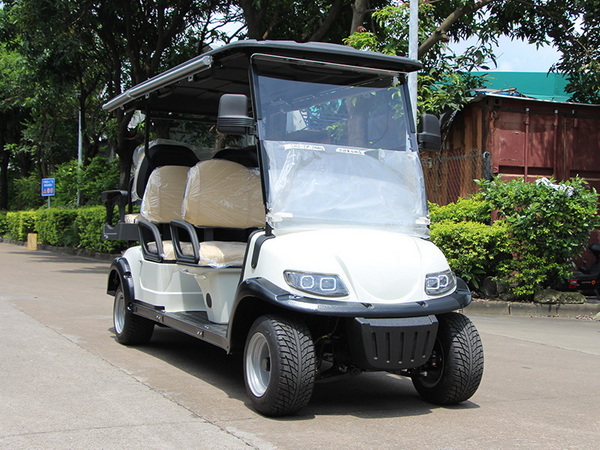
An electric golf cart is a compact, low‑speed vehicle powered by rechargeable batteries instead of a gasoline engine. It is widely used on golf courses, in gated communities, resorts, campuses, industrial parks, and as neighborhood vehicles in some regions.
Key advantages include:
- Zero tailpipe emissions and significantly lower noise levels than gas carts.
- Lower daily operating costs because electricity is cheaper and maintenance is simpler.
- Flexible configurations with 2–8 seats, cargo beds, and accessories for different industries.
This versatility is a major reason electric carts have grown beyond the golf course into tourism, real estate, and light commercial applications.
Core Components of an Electric Golf Cart
A modern electric golf cart relies on several key components that work together as a system. Each part has a specific role in converting stored electrical energy into motion and then safely stopping the vehicle.
Main components include:
- Battery pack (lead‑acid or lithium‑ion)
- Electric motor (DC or AC)
- Motor controller
- Onboard or external charger
- Throttle / accelerator pedal and key switch
- Wiring harnesses, fuses, and safety interlocks
This integrated design ensures reliable starting, predictable acceleration, and controlled braking suitable for golf courses and mixed‑use environments.
Battery Pack: The Energy Source
The battery pack is the energy “tank” of the cart, storing DC electricity for the motor and electronics. Most electric golf carts use either deep‑cycle lead‑acid batteries or modern lithium‑ion packs connected in series to provide the required system voltage, commonly 36 V or 48 V.
Key points about batteries:
- Lead‑acid packs are cheaper upfront but heavier, require periodic watering, and have shorter lifespans.
- Lithium‑ion packs offer higher energy density, longer cycle life, faster charging, and lower weight, which improves range and performance.
- Proper charging, regular checks of terminals, and keeping the pack clean and dry significantly extend battery life.
Electric Motor: Converting Electricity to Motion
The electric motor is the heart of the drivetrain, converting electrical energy into mechanical rotation. When current flows through the motor windings, it generates a rotating magnetic field that forces the rotor to spin and deliver torque to the wheels.
Common characteristics:
- Many carts use robust DC motors, while newer high‑end models adopt AC motors for better efficiency and hill‑climbing.
- The motor's power rating and cooling design influence acceleration, top speed, and ability to carry loads or climb slopes.
- Performance upgrades often focus on more powerful motors matched to upgraded controllers and battery systems.
Motor Controller: The “Brain” of the System
The motor controller acts as the brain of the electric golf cart, regulating how much power from the battery reaches the motor. It reads input from the accelerator pedal and converts that into precise voltage and current levels, which dictate speed and torque.
Typical controller functions:
- Smoothly ramping power to avoid jerky starts and protect drivetrain components.
- Managing direction (forward / reverse) and coordinating with safety interlocks such as key switch and brake switch.
- Supporting advanced features like programmable speed limits, regenerative braking, and onboard diagnostics in newer models.
Charger and Charging Process
The charger converts AC power from a wall outlet into controlled DC power to safely recharge the battery pack. Many carts use smart chargers that monitor voltage, temperature, and state of charge to avoid overcharging and to maximize battery life.
Charging essentials:
- Lead‑acid chargers typically follow multi‑stage profiles (bulk, absorption, float) and may take 6–8 hours for a full charge.
- Lithium‑ion chargers often support faster charging and integrate with a battery management system (BMS) for cell balancing and protection.
- Best practice is to plug in after each use, ensure adequate ventilation, and avoid repeatedly deep‑discharging the pack.
Step‑by‑Step: How an Electric Golf Cart Works
From the driver's perspective, operating an electric golf cart is simple, but multiple subsystems coordinate in real time. Understanding each step helps owners diagnose basic issues and explain the value of key components to buyers.
1. The driver turns the key switch to “ON,” closing the main control circuit and activating the controller.
2. The driver selects a direction (forward or reverse), which sets the controller's output mode and activates the corresponding indicators.
3. Pressing the accelerator pedal sends a signal (often from a sensor or potentiometer) to the controller that represents the desired speed.
4. The controller responds by delivering controlled DC power from the battery pack to the motor, increasing voltage and current as the pedal is pressed further.
5. The motor converts this electrical energy into rotation, and through the axle and differential it turns the wheels to move the cart.
6. When the driver releases the pedal or presses the brake, the controller reduces or cuts power, and in some models regenerative braking engages to slow the cart and recover energy.
Regenerative Braking and Safety Systems
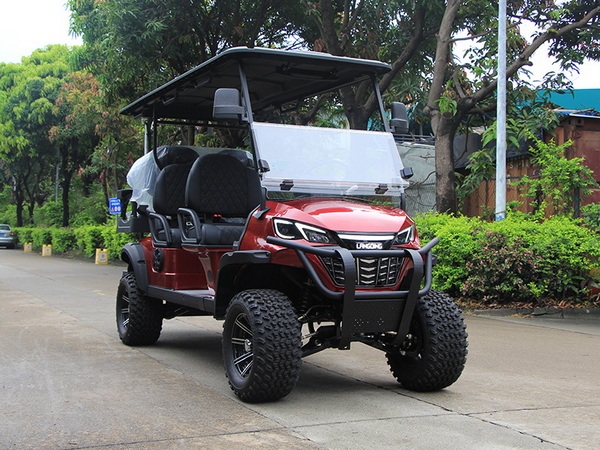
Many newer electric golf carts use regenerative braking to capture some of the energy normally lost as heat when slowing down. During deceleration, the motor temporarily acts as a generator, feeding energy back into the battery pack and extending effective range.
Typical safety‑related features include:
- Speed limiters and automatic braking behavior on steep descents to maintain control.
- Interlocks that prevent movement while charging, with the seat lifted, or with the key in the off position.
- Visual and audible alerts for low battery, parking brake status, or system faults in higher‑end carts.
Lead‑Acid vs Lithium‑Ion Golf Cart Batteries
Battery choice is one of the most important buying decisions for fleets, resorts, and private owners. The market is steadily shifting toward lithium‑ion packs due to demand for better performance, lower maintenance, and longer life.
Battery Type Comparison
Aspect | Lead-acid batteries | Lithium-ion batteries |
Typical lifespan | About 3–5 years with careful maintenance. | Often 8–10 years or more in golf cart use. |
Weight | Heavy, which reduces payload and efficiency. | Much lighter, improving acceleration and range. |
Range per charge | Shorter, especially as packs age. | Longer and more stable range over time. |
Charging time | Typically slower; full charge often takes several hours. | Faster; rapid charging options are widely available. |
Maintenance | Regular watering and terminal cleaning required. | Low maintenance; sealed packs with integrated BMS. |
Upfront cost | Lower initial purchase price. | Higher initial cost but lower cost of ownership over life. |
This comparison helps buyers and fleet managers quickly understand trade‑offs when upgrading existing carts or specifying new OEM models.
New Trends: Smart and Connected Golf Carts
Recent models increasingly incorporate smart technology that improves safety, energy management, and user experience. Lithium packs with integrated BMS and wireless monitoring have become a key trend for modern golf cart fleets.
Notable innovations include:
- Real‑time battery monitoring via mobile apps, showing state of charge, battery health, and estimated remaining range.
- Integrated GPS, geofencing, and fleet management dashboards for golf courses, resorts, campuses, and industrial sites.
- Optimized energy recovery and charging profiles that extend battery life and reduce total electricity consumption.
Practical Maintenance Tips for Longer Life
Good maintenance habits dramatically increase the reliability and total lifespan of electric golf carts. For fleet owners, this directly reduces downtime and overall cost of ownership.
Key maintenance practices:
- Keep batteries charged, clean, and dry; inspect cables and terminals regularly for corrosion or loose connections.
- Follow manufacturer recommendations on tire pressure, brake inspection, and lubrication of moving parts.
- Schedule regular checks of controller, motor, and charger, especially where carts run many hours per day.
Choosing the Right Electric Golf Cart for Your Application
Different applications require different combinations of battery type, motor power, seating, and options. Matching configuration to real‑world conditions is crucial for performance and return on investment.
Important decision factors:
- Required range per day, typical terrain, and maximum passenger or cargo load.
- Preference for lower upfront cost (lead‑acid) versus higher efficiency and longevity (lithium‑ion).
- Need for special features such as street‑legal lighting, lift kits, weather enclosures, or custom bodies for industrial or hospitality use.
Use Case and Configuration Overview
Use scenario | Typical configuration | Key considerations |
Golf courses | 2–4 seats, moderate-power motor, lead-acid or lithium pack. | Quiet operation, predictable range, easy service for fleets. |
Resorts & hotels | 4–8 seats, lithium packs, accessories for comfort. | Guest comfort, reliability, stylish design, fast charging. |
Gated communities | 2–4 seats, often street-legal packages. | Safety equipment, lighting, range for daily errands. |
Industrial & campuses | Utility beds, higher-torque motors, lithium packs. | Load capacity, hill-climbing, durability under continuous use. |
This structured view helps end users and distributors align vehicle specifications with daily usage patterns.
Why OEM Electric Golf Carts Matter for Brands and Distributors
For international brands, wholesalers, and vehicle producers, working with a specialized OEM factory ensures consistent quality and tailored specifications. Professional manufacturers of electric golf carts and other low‑speed EVs can customize body design, seating layouts, battery options, and electronic systems to match regional standards and customer expectations.
Key OEM partnership benefits:
- Custom engineering for branding, safety regulations, and street‑legal requirements in different markets.
- Scalable production with consistent component quality, from frames and suspensions to controllers, harnesses, and accessories.
- Technical support for integrating lithium‑ion battery packs, smart controllers, and fleet management systems into complete vehicles.
Premium OEM Solutions for Modern Electric Golf Carts
For brands and distributors, partnering with an experienced electric golf cart OEM opens the door to premium solutions for every lifestyle and application. A capable factory can offer off‑road carts, family‑oriented models, resort shuttles, and utility vehicles built on the same robust engineering foundation.
Strong OEM support typically includes:
- Assistance with chassis selection, body styling, and logo integration to protect and enhance brand identity.
- Guidance on component platforms, such as choosing between 36 V and 48 V systems, AC vs DC motors, and appropriate controller ratings.
- Flexible packaging options and accessory lines so regional dealers can easily tailor carts to local customer preferences.
This approach allows downstream partners to focus on marketing, sales, and service, while the OEM handles engineering, production, and continuous technical upgrades.
Action Call: Partner with a Dedicated Electric Golf Cart OEM
Electric golf carts combine efficient power systems, low noise, and flexible design, making them ideal for golf courses, resorts, gated communities, campuses, and light‑duty commercial operations. For brands, wholesalers, and vehicle manufacturers, the fastest way to bring competitive electric carts to market is to partner with a dedicated OEM that focuses on golf carts and other small electric vehicles.
If your business is planning to:
- Launch or expand a private‑label electric golf cart line,
- Upgrade fleets from lead‑acid to lithium‑ion technology, or
- Develop customized low‑speed EVs for tourism, real estate, or industrial logistics,
prepare a clear requirement list covering target market, range, seating, battery type, smart features, and styling. Then contact a specialized electric golf cart OEM manufacturer to discuss engineering options, receive tailored configuration proposals, and request a detailed quotation. Acting now allows your brand to secure reliable supply, leverage the latest electric drivetrain technology, and deliver high‑value vehicles to customers in the next buying cycle.
Contact us to get more information!
FAQs About Electric Golf Carts
1. How long does an electric golf cart battery pack typically last?
Battery life depends on battery type, usage, and maintenance. Lead‑acid packs commonly last around 3–5 years with proper care, while lithium‑ion packs in golf cart applications often provide 8–10 years or more of reliable service.
2. How far can an electric golf cart go on a single charge?
Range varies with battery capacity, load, terrain, and driving style. Many standard carts travel roughly 15–25 miles per charge, while advanced lithium‑powered models configured for extended use can exceed 40–70 miles per charge in real‑world conditions.
3. Are electric golf carts suitable for street use?
In some regions, properly equipped electric carts can be registered as low‑speed vehicles for use on designated public roads. Requirements typically include headlights, turn signals, mirrors, seat belts, and compliance with local safety regulations and speed limits.
4. What are the main advantages of electric versus gas golf carts?
Electric carts are much quieter, have no exhaust emissions at the point of use, and usually cost less to operate and maintain. Gas carts can offer longer range and quick refueling, but involve higher noise levels, more frequent maintenance, and fuel expenses.
5. Can older lead‑acid golf carts be upgraded to lithium‑ion batteries?
Many older carts can be converted to lithium using dedicated upgrade kits that include compatible battery packs, chargers, and sometimes controller adjustments. The conversion should be engineered and installed by qualified technicians to ensure correct wiring, weight distribution, and system protection.
Citations:
1. https://golfcarts.com/how-do-electric-golf-carts-work/
2. https://golfcarts.com/how-fast-do-electric-golf-carts-go/
3. https://golfcarts.com/what-are-the-most-popular-features-for-golf-carts/
4. https://www.puttersgolfcarts.com/blogs/putters-blogs/how-a-golf-cart-works-a-complete-guide-to-golf-cart-mechanisms-1
5. https://taraelectricvehicles.com/blog/2025/07/24/what-are-the-components-of-an-electric-golf-cart/
6. https://intermountaingolfcars.com/the-rise-of-smart-golf-carts-in-2025/
7. https://centralcoastcarts.com/central-coast-carts/2025-golf-cart-technology/
8. https://www.zesepower.com/blog/2025-trends-in-lithium-golf-cart-batteries/
9. https://www.borcart.com/how-do-electric-golf-carts-work-a-complete-guide-for-modern-golf-courses-and-resorts.html
10. https://www.3guysgolfcarts.com/collections/electric-power-parts


