Content Menu
● Electric Golf Cart Speed Basics
● Safety and Legal Considerations Before Modifying
● Low‑Cost Ways to Make an Electric Golf Cart Faster
>> 1. Optimize Tire Pressure and Alignment
>> 2. Reduce Unnecessary Weight
>> 3. Eliminate Power and Brake Losses
● Battery Upgrades: The Core of Speed and Range
>> Higher‑Quality Batteries at the Same Voltage
>> Voltage Upgrades (e.g., 36 V to 48 V)
>> Switching from Lead‑Acid to Lithium
● Motor and Controller Upgrades for Serious Performance
>> Speed‑Rated Motors
>> Higher‑Amperage Controllers
● Adjusting or Removing Speed Limiters
● Gear Ratios, Tire Size, and Mechanical Leverage
>> Using Taller Gear Ratios
>> Choosing the Right Tire Size
● Aerodynamics, Traction, and Handling at Higher Speeds
● Maintenance Routines That Preserve Speed and Reliability
>> Battery Care
>> Chassis and Drivetrain Care
>> Electrical System Checks
● Step‑by‑Step Roadmap to Make an Electric Golf Cart Faster
>> Step 1: Define Your Goals and Environment
>> Step 2: Restore and Optimize the Stock Setup
>> Step 3: Implement Low‑Cost Improvements
>> Step 4: Upgrade Batteries and Controller
>> Step 5: Enhance Motor, Gearing, and Tires
>> Step 6: Re‑Evaluate Safety and Compliance
● Why Work with a Professional OEM Partner
● Take Action: Build Your Next High‑Performance Golf Cart with LANGQING
● FAQ: Making an Electric Golf Cart Faster
>> 1. How fast can an electric golf cart go after upgrades?
>> 2. Is it safe to remove the speed limiter on my golf cart?
>> 3. Do larger tires always make an electric golf cart faster?
>> 4. Are lithium batteries worth it for speed upgrades?
>> 5. Will speed upgrades affect the street‑legal status of my golf cart?
● Citations:
Boosting an electric golf cart's speed is absolutely possible when you combine smart mechanical upgrades with strict safety and legal compliance. Done correctly, performance improvements can enhance acceleration, hill‑climbing ability, and top speed without sacrificing reliability or driver comfort.
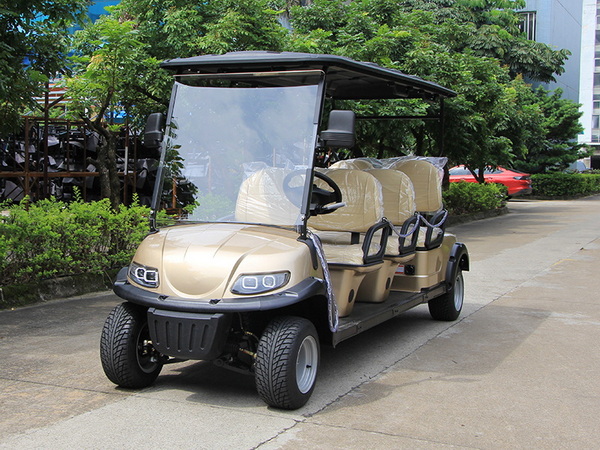
Electric Golf Cart Speed Basics
Before changing anything, it is essential to understand how a standard electric golf cart is designed to perform. Most stock models are built to run at around 12–15 mph on flat ground with a healthy battery pack and standard tires.
Several core factors define your cart's base speed:
- Battery pack voltage and health: Degraded or poorly maintained batteries deliver lower voltage under load, reducing both speed and torque.
- Motor and controller limits: Factory programming usually caps current and motor RPM to protect components and meet safety and regulatory requirements.
- Cart weight and rolling resistance: Extra passengers, accessories, cargo, soft tires, and aggressive treads all increase resistance and slow the cart down.
Once you understand this baseline, every later upgrade to make an electric golf cart faster becomes more predictable and easier to control.
Safety and Legal Considerations Before Modifying
Any plan to make an electric golf cart go faster should start with safety and regulations, not with parts. Where and how the cart is used determines what is allowed and what is advisable.
Important considerations include:
- Speed caps for street‑legal carts: Many regions limit street‑legal golf carts or low‑speed vehicles to roughly 20–25 mph. Exceeding this range can change the vehicle's classification.
- Reclassification as an LSV: If a cart is modified to go significantly faster, it may be reclassified as a low‑speed vehicle with additional requirements such as lighting, mirrors, seat belts, and registration.
- Road and driver rules: Local rules often restrict carts to roads with lower posted limits and may impose age and licensing requirements on drivers.
Fleet operators and communities should define clear written policies on maximum speeds, allowed modifications, and maintenance standards to reduce risk and ensure consistent compliance.
Low‑Cost Ways to Make an Electric Golf Cart Faster
Not every performance gain requires expensive hardware. Before upgrading motors and controllers, start with simple, cost‑effective improvements that can restore or unlock lost speed.
1. Optimize Tire Pressure and Alignment
Correct tire pressure and alignment have a direct impact on speed and efficiency. Under‑inflated tires increase rolling resistance, while poor alignment causes drag.
Practical steps:
- Keep all tires at the manufacturer's recommended PSI for optimal rolling resistance and tire life.
- Check alignment regularly so the cart tracks straight instead of “scrubbing” the road and wasting energy.
2. Reduce Unnecessary Weight
Every kilogram the cart carries demands more torque and battery power. Extra weight slows acceleration and reduces top speed.
Simple measures:
- Remove unused accessories, tools, and cargo from the cart.
- For fleets, implement a “clean cart” guideline so drivers return carts free of unnecessary items.
3. Eliminate Power and Brake Losses
Small inefficiencies in the electrical and brake systems can noticeably reduce speed.
Focus on:
- Cleaning and tightening battery and cable connections to reduce resistance and voltage drop.
- Inspecting brakes for dragging pads or misadjusted cables that create constant friction.
These steps alone often make an electric golf cart faster by bringing it back to its intended factory performance.
Battery Upgrades: The Core of Speed and Range
When owners ask how to make a 48 volt golf cart faster, battery performance is usually part of the solution. The battery pack is the heart of the system and heavily influences both speed and range.
Higher‑Quality Batteries at the Same Voltage
Upgrading to higher‑quality batteries at the existing system voltage can provide:
- More stable voltage under load.
- Better performance on hills and with heavy passengers.
- More consistent speed throughout the discharge cycle.
This option is often the simplest starting point for carts that already use a 48 V configuration.
Voltage Upgrades (e.g., 36 V to 48 V)
Raising the system voltage can significantly enhance both acceleration and top speed, but it must be done carefully.
Key points:
- The motor, controller, solenoid, and related components must all be rated for the higher voltage.
- The charger must be compatible with the new voltage and battery chemistry.
- Wiring needs to be suitable for the resulting current and load conditions.
Switching from Lead‑Acid to Lithium
Lithium battery technology is a powerful way to make an electric golf cart go faster and more efficient:
- Lithium packs are lighter, reducing overall vehicle weight and improving acceleration.
- They hold voltage more consistently under load, helping maintain speed on hills and during extended use.
- They typically charge faster and offer longer cycle life when managed correctly.
Before making the switch, verify compatibility, choose a reputable battery management system, and confirm installation standards.
Motor and Controller Upgrades for Serious Performance
For owners who want substantial increases in speed and torque, upgrading the motor and controller is one of the most effective solutions.
Speed‑Rated Motors
A speed‑focused motor can increase top speed by spinning at higher RPMs:
- On flat ground, the cart can achieve higher maximum speeds at the same voltage.
- Low‑end torque may slightly decrease compared with a pure “torque” motor, so usage scenarios should guide the choice.
Higher‑Amperage Controllers
The controller determines how much current is delivered to the motor. A more capable controller can:
- Provide stronger acceleration and better hill‑climbing.
- Offer smoother, more precise throttle response.
- Support future upgrades such as lithium batteries or different gear ratios.
When combined, an appropriate motor and controller pairing can significantly improve both speed and drivability, but they also increase demand on cables, solenoids, and brakes. It is essential to assess the full system, not just one component.
Adjusting or Removing Speed Limiters
Most modern electric golf carts include built‑in speed limiters, either in software or hardware, to protect users and components.
Key considerations:
- Some models allow authorized technicians to adjust limiter settings within safe factory‑approved ranges.
- Fully bypassing or removing the limiter may push components beyond their design and can violate local laws or insurance conditions.
- Newer carts often include locked‑down software to prevent extreme settings, exactly to manage safety and liability.
Any change to limiter settings should be aligned with braking capabilities, frame stability, and local legal limits.
Gear Ratios, Tire Size, and Mechanical Leverage
Mechanical leverage plays a large role in how fast an electric golf cart can go and how it behaves on hills.
Using Taller Gear Ratios
Changing to a taller (higher‑speed) rear axle gear ratio can:
- Increase top speed by reducing motor RPM at a given road speed.
- Reduce low‑speed torque and hill‑climbing performance.
This approach is best suited for carts used mainly on relatively flat terrain.
Choosing the Right Tire Size
Larger‑diameter tires effectively increase the distance traveled per motor revolution, raising possible top speed. However:
- Oversized tires can strain the motor and controller if torque is insufficient.
- They may negatively impact acceleration and low‑speed control, especially on steep hills.
The best results usually come from balancing tire size with controller capacity, motor type, and intended terrain.
Aerodynamics, Traction, and Handling at Higher Speeds
As speed increases, aerodynamics, traction, and stability become more important for both safety and comfort.
Helpful improvements:
- Streamlined windshields and canopies that channel airflow more smoothly over the cart.
- Front air dams and modest rear spoilers that help reduce turbulence and stabilize handling.
- Quality tires matched to the surface (golf turf, pavement, mixed use) to provide reliable grip and short stopping distances.
Braking systems should always be reviewed when pursuing higher speeds, and upgrades to brake pads, cables, or hydraulic systems may be necessary.
Maintenance Routines That Preserve Speed and Reliability
A well‑maintained cart often performs better than a neglected cart with premium parts. Regular service helps maintain consistent speed and extends component life.
Battery Care
Good battery maintenance includes:
- Following correct charging practices and avoiding repeated deep discharges.
- Keeping water levels within the recommended range for flooded batteries.
- Inspecting cases and terminals for leaks, swelling, and corrosion.
Chassis and Drivetrain Care
Reducing mechanical drag preserves speed:
- Grease suspension, steering, and drivetrain points as recommended.
- Inspect wheel bearings, hubs, and brake assemblies for wear or excessive resistance.
Electrical System Checks
Reliable power delivery is essential for higher speeds:
- Tighten high‑current connections and look for signs of heat or discoloration.
- Replace damaged or undersized cables with appropriate gauge wiring.
These steps support both stock carts and heavily modified performance builds.
Step‑by‑Step Roadmap to Make an Electric Golf Cart Faster
To avoid random, inefficient upgrades, follow a clear roadmap that integrates safety, performance, and budget.
Step 1: Define Your Goals and Environment
- Decide your target top speed and whether the cart will be used only on golf courses, inside communities, or on public roads.
- Clarify whether the cart needs to remain within standard golf‑course limits or meet street‑legal requirements.
Step 2: Restore and Optimize the Stock Setup
- Fully service batteries, brakes, tires, and electrical connections.
- Confirm that the cart is achieving its original design speed before adding new components.
Step 3: Implement Low‑Cost Improvements
- Optimize tire pressure and alignment.
- Remove unnecessary weight and ensure brakes are not dragging.
Step 4: Upgrade Batteries and Controller
- Choose higher‑quality or higher‑voltage packs where appropriate.
- Match the controller to the battery system and target performance level.
Step 5: Enhance Motor, Gearing, and Tires
- Select a motor tuned for speed, torque, or a balanced profile based on your use case.
- Adjust gear ratios and tire size in line with terrain, load, and legal speed limits.
Step 6: Re‑Evaluate Safety and Compliance
- Test braking distance, handling, and stability at the new speed.
- Confirm compliance with local regulations for road use or community operation.
This roadmap helps both individual owners and fleet managers implement upgrades in a controlled, professional way.
Why Work with a Professional OEM Partner
For overseas brand owners, wholesalers, and assemblers, working with a specialized OEM factory is often the most efficient way to offer high‑performance electric golf carts that remain safe and compliant.
A capable OEM partner can:
- Engineer golf carts with optimized combinations of motors, controllers, gear ratios, and battery packs tailored to your market's speed and range requirements.
- Pre‑configure street‑legal specifications, including lighting, signaling, mirrors, and braking systems aligned with target regulations.
- Offer modular upgrade packages, such as lithium battery options, enhanced suspensions, and larger‑diameter performance wheel sets.
This approach shortens development cycles, reduces warranty risk, and delivers ready‑to‑brand products that match local expectations and legal standards.
Take Action: Build Your Next High‑Performance Golf Cart with LANGQING
If you are a golf cart brand owner, importer, or wholesaler looking to offer faster, safer, and fully compliant electric golf carts, the most effective approach is to work with a professional OEM partner from the start. By collaborating with LANGQING, you can define target speeds, ranges, and legal requirements at the design stage and receive complete vehicles built around those objectives.
LANGQING provides flexible OEM and ODM services, including motor and controller selection, battery configuration, braking and suspension upgrades, and exterior styling tailored to your market and brand. Reach out to LANGQING today to discuss your project, and transform your next electric golf cart lineup into a high‑performance, market‑ready solution that delivers both speed and safety for your customers.
FAQ: Making an Electric Golf Cart Faster
1. How fast can an electric golf cart go after upgrades?
With well‑planned upgrades, many electric golf carts can reach speeds in the 20–25 mph range while still aligning with typical low‑speed vehicle rules in many regions. More extreme builds are possible but usually require additional safety, registration, and insurance measures.
2. Is it safe to remove the speed limiter on my golf cart?
Fully removing the speed limiter is rarely the safest option. It can over‑stress the motor and controller, compromise braking distance, and violate local rules. It is generally better to adjust settings within safe, manufacturer‑supported ranges or pair limiter changes with matching upgrades to brakes and chassis.
3. Do larger tires always make an electric golf cart faster?
Larger tires can increase effective road speed by covering more distance per rotation, but they also reduce mechanical leverage. If the motor and controller are not strong enough, acceleration and hill performance may suffer, and components may overheat. Tire changes should always be matched with powertrain capability.
4. Are lithium batteries worth it for speed upgrades?
Lithium batteries are often worth considering when you want better acceleration, more consistent speed under load, and reduced vehicle weight. They can significantly enhance performance and range, especially for carts that are used frequently or carry heavy loads. However, they require proper integration and quality components.
5. Will speed upgrades affect the street‑legal status of my golf cart?
Yes, speed upgrades can affect street‑legal status. If your cart surpasses certain speed thresholds defined by local regulations, it may be reclassified and need additional safety equipment, registration, and possibly insurance. Always check local rules before making major performance modifications.
Citations:
1. https://www.kandiamerica.com/electric-golf-cart-speed-tips/
2. https://petesgolfcarts.com/general-golf-cart-ownership/how-to-make-an-electric-golf-cart-faster/
3. https://www.kandiamerica.com/what-is-a-street-legal-golf-cart/
4. https://www.gcsuperstore.com/tips-to-boost-electric-golf-cart-speed/
5. https://evtitan.com/golf-cart-laws-regulations-state-by-state-guide/
6. https://www.improvecn.com/articles/top-10-secrets-to-a-faster-electric-golf-cart
7. https://www.specialtycarco.com/check-out-our--street-legal


