Content Menu
● What “Golf Cart Weight” Really Means
● Average Golf Cart Weight (Quick Reference)
● Electric vs Gas Golf Cart Weight
>> Electric Golf Cart Weight
>> Gas Golf Cart Weight
● Weight by Seating Capacity and Configuration
>> Typical Weights by Cart Type
● How Accessories and Customization Change Golf Cart Weight
● Why Golf Cart Weight Matters in Real Use
● How Much Weight Can a Golf Cart Carry?
● Towing With and Transporting a Golf Cart
>> How Much Can a Golf Cart Tow?
>> Choosing a Trailer to Transport Your Golf Cart
● Real-World Examples of Golf Cart Weights
● Practical Steps to Find and Manage Your Golf Cart's Weight
>> 1. Confirm the Exact Model Specifications
>> 2. Audit Your Accessories and Modifications
>> 3. Calculate Safe Operating and Towing Limits
>> 4. Plan Transport and Storage
● Where a Professional OEM Partner Adds Value
● Clear Call to Action
● FAQs: Golf Cart Weight
>> 1. How much does a standard golf cart weigh?
>> 2. Do electric golf carts weigh more than gas models?
>> 3. How much weight can a golf cart safely carry?
>> 4. How do I know if my golf cart is overloaded?
>> 5. What size trailer do I need for my golf cart?
● Citations:
Knowing how much a golf cart weighs is critical for safe towing, trailer selection, storage planning, and long-term performance of the cart. This guide explains golf cart weight in depth, including electric vs gas, seating capacity, batteries, towing, and practical tips for real-world use.
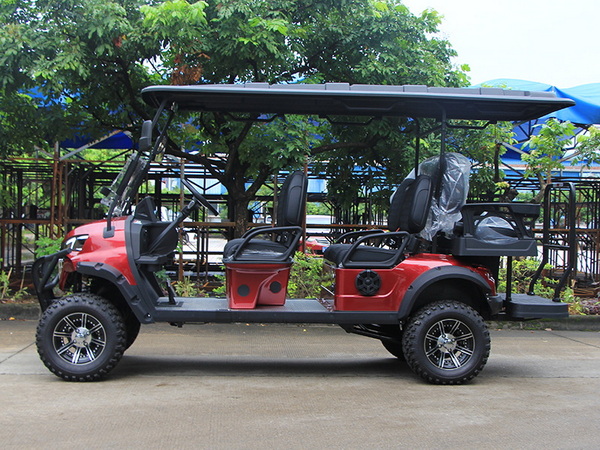
What “Golf Cart Weight” Really Means
When people ask “how much does a golf cart weigh?”, they often mix up several different weight terms. Understanding these definitions is the foundation for safe operation and transport.
- Dry weight
This is the weight of the cart without consumable fluids and, in the case of electric carts, without the battery pack. Dry weight is useful for shipping calculations and comparing bare chassis between models.
- Curb weight
Curb weight is the weight of the golf cart ready to drive: with all standard equipment, batteries or fuel, and fluids, but without passengers or cargo. This is the most important number for towing, trailer selection, and storage planning.
- Payload / weight capacity
Payload is how much additional weight (people + cargo + accessories) you can safely add on top of the cart's own curb weight. Exceeding this value can damage suspension, brakes, and frame, and can create serious safety risks.
- Gross vehicle weight (GVW)
GVW is the actual total weight at any moment: cart + batteries/fuel + passengers + cargo + accessories. Keeping GVW within the manufacturer's limits is essential for performance and compliance.
Average Golf Cart Weight (Quick Reference)
Most standard golf carts fall into a relatively predictable weight range depending on seat count and configuration.
- Standard 2-passenger electric golf cart: about 900–1,100 lb (408–499 kg) curb weight.
- Standard 2-passenger gas golf cart: commonly in the 900–1,100 lb range as well, sometimes slightly heavier depending on engine and frame.
- 4-passenger golf cart: typically around 750–1,200 lb depending on brand, battery type, and whether it has a rear-seat kit or extended frame.
- 6-passenger golf cart: often 980–1,895 lb, especially for lifted or fully equipped shuttle-style carts.
- Heavily equipped lifted 6-passenger carts: can approach or exceed 1,600 lb.
Electric vs Gas Golf Cart Weight
Both electric and gas golf carts generally fall in a similar total weight range, but the weight distribution and drivetrain components differ significantly.
Electric Golf Cart Weight
Electric golf carts usually weigh around 900–1,100 lb, with the battery pack contributing a large share of the total. A typical lead-acid battery pack can weigh 300–500 lb (136–227 kg) by itself.
Key contributors to electric golf cart weight:
- Battery pack:
Lead-acid: about 300–500 lb (136–227 kg).
Lithium-ion: generally lighter at around 150–300 lb (68–136 kg) for similar performance.
- Electric motor and controller: often add roughly 50–100 lb (23–45 kg).
- Seats, steering, and accessories: can contribute another 50–100 lb (23–45 kg) depending on design.
- Chassis and body: reinforced plastic, steel, and aluminum structures typically weigh around 200–300 lb (91–136 kg).
Because batteries are the heaviest single component in an electric golf cart, upgrading to lithium-ion can significantly reduce total weight, improve acceleration, and extend range.
Gas Golf Cart Weight
Gas carts eliminate the heavy battery pack but add weight through the engine, fuel system, and larger mechanical drivetrain components. In practice, many gas models still land in the 900–1,100 lb range, although they may be slightly heavier than a comparable lithium-powered cart.
Typical gas golf cart weight characteristics:
- Engine, fuel tank, exhaust, and transmission add substantial weight.
- Dry weight may be closer to curb weight because there is no heavy removable battery pack.
- Weight distribution and vibration differ, which can influence ride quality and towing behavior.
Weight by Seating Capacity and Configuration
Seat count and body style have a direct impact on structural requirements, frame length, and therefore total weight.
Typical Weights by Cart Type
Cart type | Typical curb weight (approx.) |
2-passenger electric | 900–1,100 lb |
2-passenger gas | 900–1,100 lb |
4-passenger (extended roof / rear seat) | 750–1,200 lb |
6-passenger shuttle / lifted cart | 980–1,895 lb |
More seats mean more frame material, more roof structure, and often more batteries, all of which increase weight. For fleets such as resorts, campuses, and communities, knowing exact weight per configuration helps to plan transport trucks, trailers, and storage racks.
How Accessories and Customization Change Golf Cart Weight
Real-world golf carts rarely stay in factory configuration. Accessories, aftermarket kits, and cosmetic upgrades can significantly change total weight.
Common upgrades that add weight include:
- Rear seat kits and cargo beds: typically add 100–200 lb when including mounting hardware and extra structure.
- Lift kits: can add 50–80 lb, especially if combined with heavy-duty suspension parts.
- Larger wheels and tires: can add around 50 lb, depending on wheel material and tire size.
- Roof extensions, enclosures, and windshields: add incremental weight that raises the center of gravity.
- Audio systems, light bars, winches, and other electronics: often add 50–200 lb in total when fully outfitted.
Moderate customization can easily push a standard cart from around 950 lb to over 1,200 lb, especially in multi-passenger formats. For fleet operators or OEM buyers, building a weight budget for each configuration is essential to avoid overloading and maintain performance.
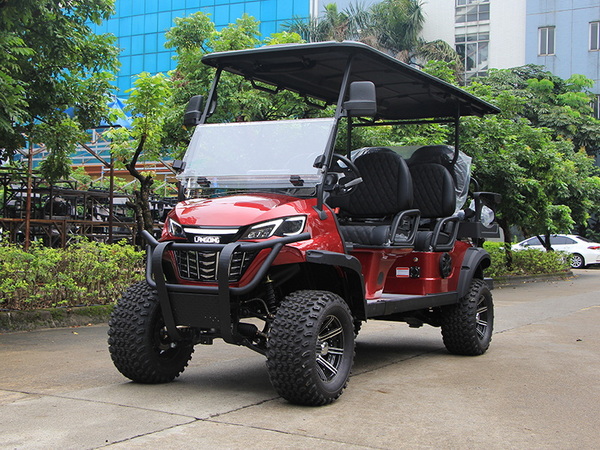
Why Golf Cart Weight Matters in Real Use
The heavier the golf cart, the more it affects handling, braking, energy consumption, and maintenance demands.
Key impacts of weight on performance:
- Acceleration and top speed: heavier carts require more power to reach the same speed, which can reduce acceleration and responsiveness, especially on hills.
- Braking distance: additional mass increases stopping distance and brake wear, particularly when routes include slopes or towing.
- Battery life and fuel consumption: electric carts use more energy per mile as weight increases, shortening range and increasing charge cycles; gas carts see higher fuel use.
- Suspension and frame longevity: constant overload accelerates wear on suspension components and can cause frame fatigue.
For commercial fleets, even small differences in weight per unit can scale into significant differences in lifecycle cost, especially when multiplied across dozens or hundreds of carts.
How Much Weight Can a Golf Cart Carry?
Beyond the cart's own curb weight, you must consider payload capacity: how much weight the cart can safely transport.
Typical payload ranges:
- 2-passenger carts: often rated for around 800–1,200 lb (363–544 kg) including driver, passenger, and cargo.
- 4-passenger carts: commonly handle 1,200–1,600 lb (544–726 kg) total payload.
- Utility carts (2-passenger with cargo bed): can support 800–1,200 lb depending on design.
These values include people, cargo, and accessories. Overloading beyond the manufacturer's specified weight limit can cause sluggish performance, overheating of components, excessive strain on suspension and steering, and potential structural damage.
For safety, operators should always refer to the owner's manual or OEM documentation for exact ratings per model.
Towing With and Transporting a Golf Cart
Golf cart weight is also crucial when the cart itself becomes a towed load, or when the cart is used to tow other items.
How Much Can a Golf Cart Tow?
Towing capacity depends on model, powertrain, and hitch design, and must always be confirmed with the manufacturer.
Common ranges in the market include:
- Many carts can tow around 500–800 lb safely when properly equipped with a hitch and wiring.
- Some models are rated to tow up to about 1,000 lb, mainly for small trailers, jet skis, or another golf cart.
Important towing guidelines:
- Check rated towing capacity for your exact model before towing.
- Add the trailer weight and cargo weight when calculating total towed load.
- Reduce towed load if the cart is already carrying multiple passengers or heavy cargo.
- Ensure brakes, tires, and suspension are maintained and suited to towing duty.
Choosing a Trailer to Transport Your Golf Cart
When transporting a cart on a trailer, you must match trailer capacity to the cart's curb weight plus a safety margin.
Basic trailer selection steps:
- Use the cart's confirmed curb weight as the starting point.
- Add the weight of any fixed accessories and likely cargo you will leave on the cart while transporting.
- Choose a trailer with a rated capacity higher than that combined weight, and factor in local regulations and tie-down requirements.
Real-World Examples of Golf Cart Weights
Published specifications for mainstream golf cart brands illustrate how weight varies by design and powertrain.
Typical patterns include:
- A common 2-passenger electric model may have a dry weight around 570–600 lb and a curb weight near 900–950 lb, highlighting the contribution of the battery pack.
- A comparable gas-powered model may list a higher dry weight but a smaller gap between dry and curb weights, reflecting the smaller influence of fuel weight compared with batteries.
- Across popular brands, curb weights often range from around 650 lb for light 2-seaters up to 1,250 lb or more for heavier configurations.
These figures confirm that 900–1,100 lb is a realistic average for many standard carts, with high-capacity and lifted carts moving toward the top of the range.
Practical Steps to Find and Manage Your Golf Cart's Weight
For owners, fleet managers, and OEM buyers, understanding and managing golf cart weight can be turned into a simple process.
1. Confirm the Exact Model Specifications
- Locate the manufacturer's data plate or documentation that lists curb weight and maximum load.
- Check whether the published weight includes batteries, accessories, or only base configuration.
2. Audit Your Accessories and Modifications
- List all major add-ons: rear seat, cargo box, lift kit, wheels, audio system, and so on.
- Estimate total added weight using typical ranges; for example, rear seats and lift kits alone can add more than 150–250 lb combined.
3. Calculate Safe Operating and Towing Limits
- Ensure GVW (cart + passengers + cargo + accessories) does not exceed the rated capacity.
- For towing, verify that the towed load stays within your model's towing capacity and adjust for passenger load.
4. Plan Transport and Storage
- Choose trailers and storage systems based on current curb weight with modifications, not just factory figures.
- If operating in gated communities, resorts, or industrial sites, factor weight into decisions about ramp slopes, flooring, and elevators.
Where a Professional OEM Partner Adds Value
For brands, wholesalers, and golf cart assemblers, working with an experienced OEM factory can simplify weight management across an entire product line.
A strong OEM partner can help:
- Engineer weight-optimized chassis: balancing strength, safety, and total mass for different seat counts and body styles.
- Specify battery systems intelligently: choosing between lead-acid and lithium solutions to meet range targets without unnecessary weight.
- Configure accessories by application: designing standard packages for resorts, golf courses, communities, or industrial fleets with clear weight and capacity documentation.
For overseas clients, this makes it easier to standardize specifications, communicate clear load limits to end users, and avoid warranty issues caused by overloading or improper towing.
Clear Call to Action
If you are a golf cart brand owner, distributor, or fleet operator and you need carts engineered with precise weight targets for communities, golf courses, or industrial sites, now is the time to work with a dedicated OEM manufacturer of golf carts and compact electric vehicles. By partnering with a professional factory, you can customize seating, batteries, and accessories while keeping every model within safe, clearly documented weight limits, giving your end users better performance, safer operation, and lower lifecycle costs.
Contact us to get more information!
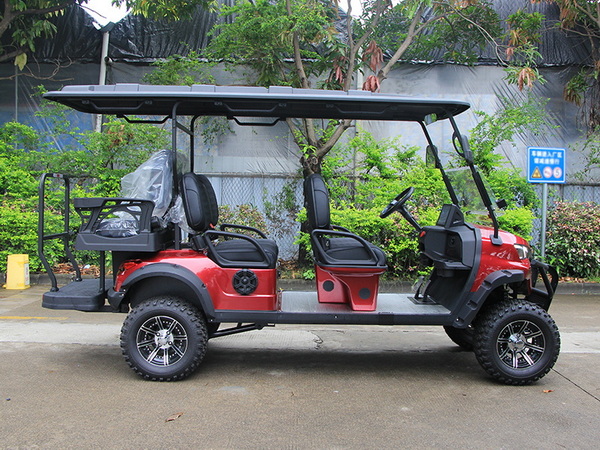
FAQs: Golf Cart Weight
1. How much does a standard golf cart weigh?
A typical 2-passenger golf cart weighs about 900–1,100 lb (408–499 kg) curb weight, depending on brand, powertrain, and battery type.
2. Do electric golf carts weigh more than gas models?
Electric carts carry heavy battery packs, but their overall curb weight often remains similar to gas carts. Both commonly fall in the 900–1,100 lb range, with configuration making the main difference.
3. How much weight can a golf cart safely carry?
Most standard 2-passenger carts support about 800–1,200 lb of combined passenger and cargo weight, while 4-passenger models often handle 1,200–1,600 lb, depending on the specific design and rating.
4. How do I know if my golf cart is overloaded?
Warning signs include sluggish acceleration, poor hill-climbing, longer braking distances, and suspension sag. If the total weight of cart, passengers, cargo, and accessories exceeds the manufacturer's stated capacity, the cart is overloaded even if it still moves.
5. What size trailer do I need for my golf cart?
You should choose a trailer rated above your cart's curb weight plus any fixed accessories and cargo you keep on the cart during transport. Always confirm that your towing vehicle can safely handle both the trailer and cart weight combined.
Citations:
1. https://golfcarts.com/how-much-does-a-golf-cart-weigh/
2. https://carts-and-parts.com/how-much-does-a-golf-cart-weigh/
3. https://golfcartsearch.com/blog/how-much-does-a-golf-cart-weigh
4. https://centralvalleycarts.com/performance/how-much-does-a-golf-cart-weigh/
5. https://www.golfcarttiresupply.com/blog/how-much-does-a-golf-cart-weigh/


