Content Menu
● Why Choose an Electric Golf Cart in 2026?
● Step 1 – Define Your Primary Use Case
>> Common Electric Golf Cart Use Scenarios
● Step 2 – Choose the Right Seating Capacity and Layout
>> Typical Seating Options
● Step 3 – Understand Battery Types and Range
>> Lead-Acid vs. Lithium Batteries
>> How Much Range Do You Really Need?
● Step 4 – Motor Power, Speed, and Terrain
>> Key Performance Factors
● Step 5 – Safety, Comfort, and Features
>> Essential Safety Elements
>> Comfort and Convenience Features
● New vs. Used Electric Golf Carts
>> When a New Electric Golf Cart Makes Sense
>> What to Check on a Used Electric Golf Cart
● Budgeting, Total Cost of Ownership, and ROI
>> Key Cost Components
● Working Directly with an OEM Manufacturer (LANGQING)
>> OEM Benefits for Brands and Wholesalers
>> How to Evaluate an OEM Partner
● Practical Pre-Purchase Checklist for Electric Golf Carts
>> 10-Point Electric Golf Cart Checklist
● Final Call to Action – Build Your Next Electric Golf Cart Lineup with LANGQING
● Frequently Asked Questions About Electric Golf Carts
>> 1. How long does an electric golf cart battery last?
>> 2. Is a lithium electric golf cart worth the higher price?
>> 3. Can electric golf carts be used off the golf course?
>> 4. What should fleet operators prioritize when buying electric golf carts?
>> 5. How does OEM sourcing from China work for electric golf carts?
● Citations:
Shopping for an electric golf cart in 2026 is very different from even a few years ago, with more models, more battery options, and many non-golf use cases like communities, resorts, campuses, and industrial parks. This guide walks you through every step of the buying process so you can select a cart that fits your usage scenario, budget, and long-term running costs, whether you buy from a local dealer or work directly with an OEM factory such as LANGQING in China.
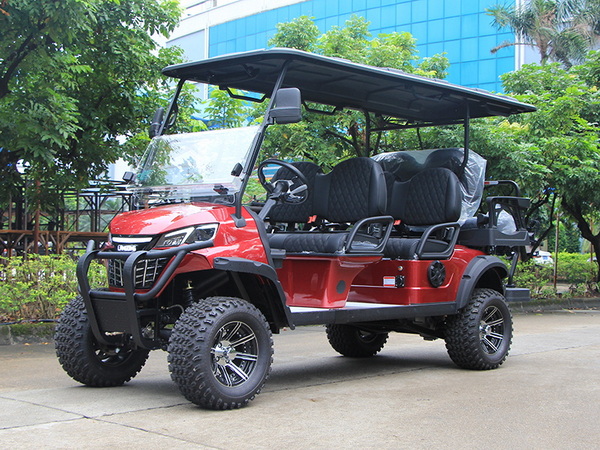
Why Choose an Electric Golf Cart in 2026?
Electric golf carts now dominate many markets because they are quieter, cleaner, and cheaper to operate than gasoline carts. For resorts, gated communities, campuses, and industrial users, they also align with stricter environmental regulations and sustainability goals.
- Lower operating cost: Electricity is generally cheaper than gasoline, and electric drivetrains have fewer moving parts, which helps reduce maintenance.
- Zero local emissions: Electric carts produce no tailpipe emissions, making them attractive for parks, campuses, and indoor or semi-enclosed facilities.
- Quiet and comfortable: Less noise improves user comfort and guest experience in hotels, resorts, and residential communities.
Step 1 – Define Your Primary Use Case
Before looking at specifications, clarify how and where you will use your electric golf cart. A cart optimized for 18 holes of golf is not always ideal for moving guests around a resort or towing loads in a factory.
Common Electric Golf Cart Use Scenarios
- Golf course use
Focus on smooth ride, quiet operation, and enough range for multiple rounds per charge.
- Neighborhood and gated community
Prioritize comfort, safety features, lights, and possibly street-legal configurations depending on local rules.
- Resorts, hotels, and theme parks
Look for multi-passenger seating (4–8 seats), weather protection, and durable components for daily fleet use.
- Campuses and industrial parks
Consider cargo beds, towing capability, and robust suspension for mixed terrain and utility work.
Step 2 – Choose the Right Seating Capacity and Layout
The number of passengers you need to carry is a core buying decision and directly affects vehicle size, cost, and battery requirements.
Typical Seating Options
- 2-seat carts: Ideal for solo golfers or operations with limited space. Usually lowest cost and easiest to store and maneuver.
- 4-seat carts: Popular in communities and resorts for small groups or families, balancing comfort and overall vehicle size.
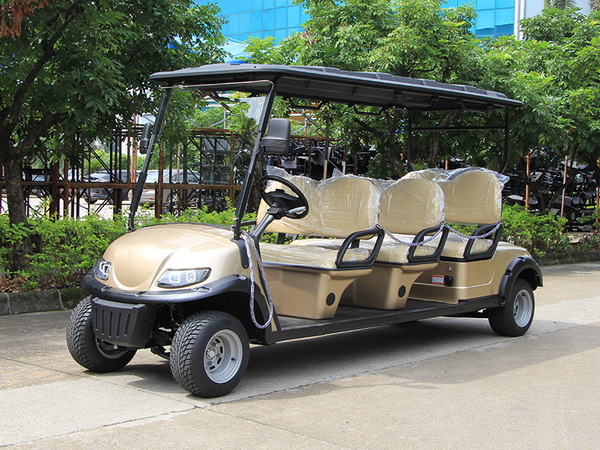
- 6-seat and 8-seat carts: Best for hotels, tour operators, and large campuses that need to move groups efficiently and reduce the number of trips.
For OEM buyers, working with a factory like LANGQING allows you to customize seat direction (forward-facing versus rear-facing), integrated storage, or foldable rear seats that convert between passengers and cargo.
Step 3 – Understand Battery Types and Range
The battery is the heart of an electric golf cart, and choosing the right technology has a huge impact on performance, charging time, and lifetime cost.
Lead-Acid vs. Lithium Batteries
Feature | Lead-acid Battery Carts | Lithium Battery Carts |
Upfront price | Lower purchase cost, suitable for tight budgets and light usage. | Higher initial cost, but more attractive for serious users and fleets. |
Weight | Heavier, which reduces efficiency and slightly affects acceleration. | Lighter, which improves acceleration, handling, and usable range. |
Maintenance | Requires regular water level checks and terminal cleaning. | Low maintenance, with no need for regular watering. |
Cycle life | Shorter life span, meaning more frequent battery replacement. | Longer life, leading to lower battery cost per year of use. |
Charging time | Generally longer charging times, especially with older chargers. | Faster charging options available, ideal for frequent use. |
Best for | Budget-sensitive, low-usage applications and backup carts. | Heavy daily use, fleets, and premium users who need reliability. |
In 2026, lithium-powered electric golf carts are quickly becoming the mainstream choice because they deliver longer range, faster charging, and lower lifetime maintenance costs. OEM factories like LANGQING can configure carts with either lead-acid or lithium packs depending on your budget and usage profile.
How Much Range Do You Really Need?
- A typical recreational user may need 20–30 miles of range per charge to cover daily errands or a few rounds of golf.
- Resorts, campuses, or industrial parks may require 30–50 miles of range per charge for continuous shuttle or utility operation.
Always consider real-world factors such as passenger load, hills, towing, and frequent stopping, which all reduce effective range. For fleets, plan for a safety margin of at least 20 percent above your calculated daily usage.
Step 4 – Motor Power, Speed, and Terrain
Motor output and drivetrain design determine how well your electric golf cart handles slopes, rough surfaces, and full loads. Matching motor power and speed to your terrain and safety requirements is essential.
Key Performance Factors
- Motor power (kW or W): Higher power improves acceleration and hill-climbing, especially for 4–8 seat carts or utility models that carry heavy loads.
- Top speed: Many golf carts are limited to around 12–20 mph, but local regulations and safety rules often define the maximum permissible speed in communities and on public roads.
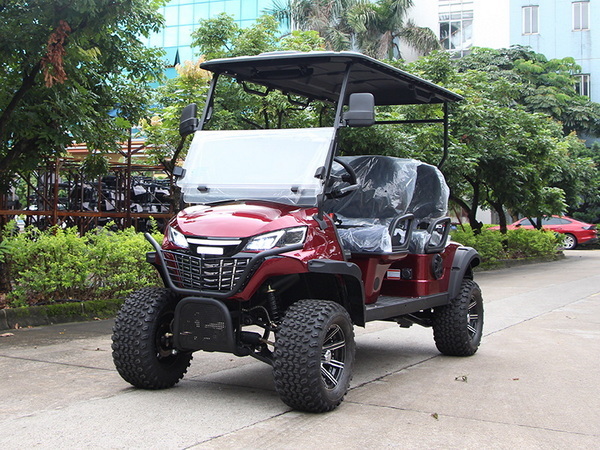
- Suspension and tires: Independent or enhanced suspension and suitable tires improve comfort and stability over grass, gravel, and uneven paths.
If your use case includes off-road paths, steep slopes, or towing, specify your terrain and load requirements clearly when working with an OEM manufacturer to ensure correct motor, controller, and gear ratio configuration.
Step 5 – Safety, Comfort, and Features
Modern electric golf carts offer a wide range of features that impact user comfort and safety as much as raw performance. Paying attention to these details helps extend vehicle life and improves user satisfaction.
Essential Safety Elements
- Braking system: Reliable mechanical or hydraulic brakes plus a secure parking brake.
- Lights and signals: Headlights, tail lights, brake lights, and turn signals for low-light, community, or on-road use.
- Seatbelts and mirrors: Important for community and resort use or where carts share space with cars, bikes, and pedestrians.
Comfort and Convenience Features
- Ergonomic seats with sufficient padding and legroom for taller passengers.
- Weather protection such as roof, windshield, and optional side enclosures for rainy or windy regions.
- Storage solutions including rear cargo beds, under-seat compartments, or integrated coolers for golf and resort operations.
- Optional accessories like Bluetooth audio, USB charging ports, and upgraded lighting packages for premium experiences.
For OEM clients, LANGQING can configure feature packages to match brand positioning, from basic fleet carts to premium community or resort models with upgraded interiors and electronics.
New vs. Used Electric Golf Carts
Choosing between a brand-new electric golf cart and a used unit is a strategic budget decision that affects risk, warranty coverage, and technology level. Both options have their place when you understand your priorities.
When a New Electric Golf Cart Makes Sense
- You need the latest lithium battery technology and smart features for demanding users.
- You want full manufacturer warranty coverage and predictable performance for several years.
- You are building or refreshing a commercial fleet and cannot afford unexpected downtime.
What to Check on a Used Electric Golf Cart
- Battery age, brand, and current performance, ideally supported by testing or service records.
- Condition of frame, suspension, steering, and braking system.
- Signs of heavy commercial use or poor maintenance, such as corrosion, damaged wiring, and uneven tire wear.
For brands and wholesalers, importing new OEM carts from a factory like LANGQING often delivers better lifecycle value than relying on mixed used carts, especially when resale value, customer expectations, and brand image are important.
Budgeting, Total Cost of Ownership, and ROI
Focusing only on purchase price is a common mistake. Serious buyers and fleet operators evaluate total cost of ownership (TCO) over several years to understand real profitability.
Key Cost Components
- Initial purchase cost, or OEM factory price for bulk orders.
- Electricity versus fuel cost over three to five years based on typical annual mileage.
- Battery replacement cycles and cost, which differ significantly between lead-acid and lithium.
- Maintenance costs for tires, brakes, suspension parts, and general servicing.
- Downtime cost for commercial users such as resorts and campuses when carts are out of service.
Working Directly with an OEM Manufacturer (LANGQING)
Beyond buying from local dealers, many brands, wholesalers, and fleet operators now source electric golf carts directly from OEM manufacturers in China to gain more control over specification, branding, and cost. This approach can deliver better margins and faster product updates.
OEM Benefits for Brands and Wholesalers
- Customization: Configure seating, batteries, motors, colors, branding, and accessories to fit your market position and customer expectations.
- Private label: Apply your logo, decals, and model naming while the factory provides engineering, testing, and production.
- Scalable supply: Support pilot orders and large volume production as your market grows without changing suppliers.
As a professional Chinese factory, LANGQING focuses on electric golf carts and other small electric vehicles, providing OEM and ODM services to overseas brands, wholesalers, and manufacturers who need reliable partners for long-term cooperation.
How to Evaluate an OEM Partner
- Review production certifications, quality management systems, and testing procedures.
- Request detailed specifications, performance data, and sample units for evaluation.
- Confirm after-sales support, spare parts availability, and documentation requirements for your local market.
Practical Pre-Purchase Checklist for Electric Golf Carts
Use this concise checklist before placing a final order with a dealer or OEM manufacturer. It helps you compare different offers quickly and avoid missing critical details.
10-Point Electric Golf Cart Checklist
- Define primary use (golf, community, resort, campus, industrial).
- Decide seating capacity and required cargo space.
- Choose battery type (lead-acid or lithium) and minimum range per charge.
- Specify motor power and acceptable top speed based on terrain and regulations.
- Confirm safety equipment: brakes, lights, signals, mirrors, and seatbelts.
- Check riding comfort: seats, legroom, suspension, and noise level.
- Assess feature package: weather protection, storage, charging ports, and optional accessories.
- Evaluate warranty terms and after-sales support, or OEM service commitments for bulk buyers.
- Calculate total cost of ownership for three to five years, including battery replacement.
- For OEM sourcing, validate factory credentials and product compliance for your target country.
Final Call to Action – Build Your Next Electric Golf Cart Lineup with LANGQING
If you are a brand owner, wholesaler, or vehicle producer planning to expand your electric golf cart range, this is the right time to secure a reliable OEM partner. LANGQING offers professional manufacturing of electric golf carts and small electric vehicles in China, with flexible customization, private labeling, and stable supply capacity tailored to your market. Reach out to LANGQING now to share your project requirements and annual volume, and start developing a customized electric golf cart solution that strengthens your brand and drives long-term growth.
Frequently Asked Questions About Electric Golf Carts
1. How long does an electric golf cart battery last?
Battery life depends on chemistry, usage pattern, and maintenance. Well-maintained lead-acid batteries often last several years, while quality lithium packs typically deliver a significantly longer life cycle. Regular charging, avoiding deep discharges, and following the manufacturer's maintenance guidelines help extend service life.
2. Is a lithium electric golf cart worth the higher price?
For users who drive frequently, operate fleets, or need longer range and faster charging, lithium battery carts usually offer better overall value despite the higher upfront cost. Lower maintenance needs, reduced downtime, and longer service life often offset the initial investment over time.
3. Can electric golf carts be used off the golf course?
Yes, many electric golf carts are used in gated communities, resorts, campuses, industrial parks, and tourist areas for short-distance transportation. Buyers should check local regulations regarding maximum speed, safety equipment, and street-legal requirements before using carts on public roads.
4. What should fleet operators prioritize when buying electric golf carts?
Fleet buyers should focus on battery technology, range, charging infrastructure, ease of maintenance, and availability of after-sales support and spare parts. Comfort, safety features, and durability under continuous operation are also critical for resorts, campuses, and industrial fleets.
5. How does OEM sourcing from China work for electric golf carts?
In an OEM model, overseas brands or wholesalers define specifications, branding, and target pricing, while the Chinese factory handles engineering, production, and testing. After sample approval, larger orders are scheduled, and the carts are shipped under the customer's brand, often with ongoing collaboration for product updates and new models.
Citations:
1. https://www.kandiamerica.com/electric-golf-cart-buying-guide/
2. https://www.carttek.com/blogs/golf-equipment-blog/the-complete-electric-golf-cart-buying-guide-for-2026
3. https://www.futuremarketinsights.com/reports/golf-cart-market
4. https://www.trielectric.in/choosing-electric-golf-cart-india-buyers-guide.php
5. https://www.globenewswire.com/news-release/2026/06/26/3105592/28124/en/Golf-Cart-Market-Outlook-2026-2034-Autonomous-and-Solar-Powered-Carts-Drive-Future-Growth.html
6. https://www.grandviewresearch.com/industry-analysis/electric-golf-cart-market-report
7. https://www.kandiamerica.com/category/electric-golf-carts/
8. https://renoruma.com/kandi-golf-cart/
9. https://www.boyermarinesales.com/blog/electric-golf-cart-buying-guide--82094


